

When parents need a tutor, they're not typically interested in spending hours on online research. They're stressed, their kid is struggling, and they want someone who's qualified, who has a great reputation, and who can start this week. If you're relying only on your tutoring website or word-of-mouth, you're probably missing some potential customers. The advertising methods that work in 2025 meet parents where they are, and we're going to show you exactly how to show up in those moments.

TLDR:
Google Business Profiles can be a key to success in local searches; set up your profile and solicit reviews.
Referred customers can be more lucrative than customers acquired through other channels, so encourage referrals.
Content marketing requires consistency. In most cases, expect results to take about six months.
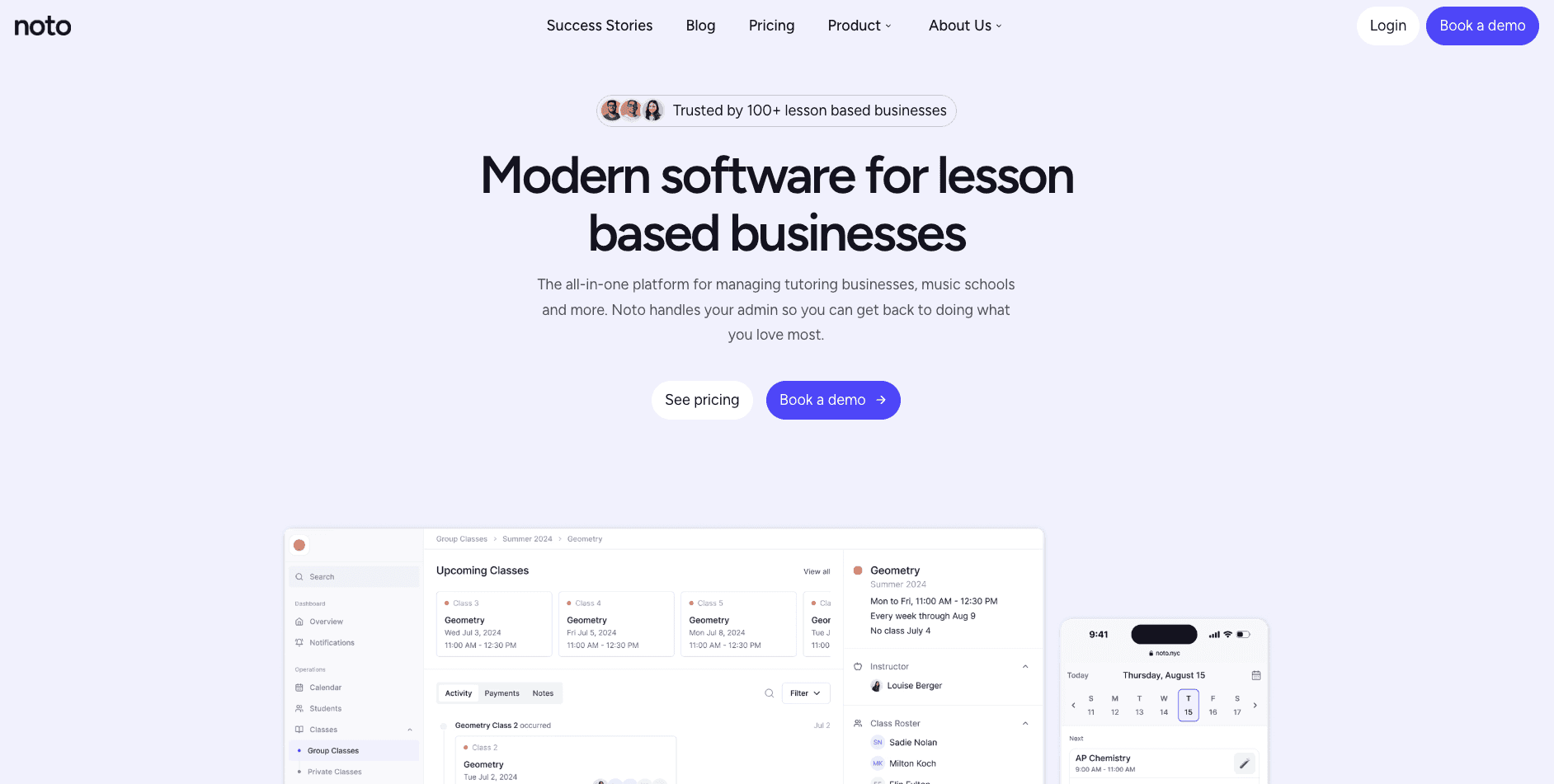
Noto automates billing, scheduling, and payments for tutoring businesses while tracking lead sources.
Build Your Online Foundation
Before spending on advertising, you need somewhere to send prospects to. Start with a simple website that states what subjects you teach, your qualifications, and your rates. Include a contact form or scheduling link so prospects can reach you immediately. A single well-designed page is usually all you need when you start out.
When you're setting up your website, you'll likely want to incorporate online payment options. And your business's payment infrastructure matters more than most tutors realize. Accepting only cash or checks creates friction that may cost you clients. Set up multiple online payment options, including credit cards and bank transfers. ACH payments save you approximately 2.5% on processing fees, compared with typical credit card fees.
Your social media profiles also function as credibility markers. Parents will Google you and check Facebook, LinkedIn, or Instagram before reaching out. You don't need to post daily, but your posts should look relatively current and show your professionalism. A complete LinkedIn profile with your background and experience answers questions before they're asked.
Claim and Optimize Your Google Business Profile
It's estimated that 87% of consumers use Google to find local businesses. When parents search "math tutor near me" or "SAT prep in [Name of City]," a properly set up profile can put you in front of them immediately.
Visit business.google.com and search for your tutoring business name. If it exists, claim it. If not, create a new listing. Google will verify your business through a postcard mailed to your address, or through phone or email. Choose "Service Area Business" if you tutor at students' homes or online rather than at a fixed storefront location.
Category selection determines when you appear in searches. Select "Tutor" as your primary category, and then add specific secondary categories like "Private Tutor" or subject-specific options if they're available. Fill out every field: hours of operation, service areas, website link, phone number, and a business description that mentions your specialties and the grade levels you serve.
Upload a professional headshot, images of your tutoring space if you have one, and photos of materials or whiteboards from sessions (with student faces removed for privacy). One study shows that profiles with photos get 35% more clicks to their websites.
Ask satisfied parents to leave Google reviews. (Send a direct link to your review page to make it easy.) And respond to every review within 48 hours, keeping responses brief and professional. Recent reviews carry more weight than older ones, so request reviews on a regular basis.
Take Advantage of Tutoring Marketplaces and Directories
Tutoring marketplaces connect you with families actively searching for help. Wyzant, Care.com, Superprof, and Tutor.com handle the advertising while you focus on teaching. These services charge fees (typically 15% to 40% of your rate) but provide access to students looking for tutors.
Create a complete profile with a professional photo, detailed subject expertise, and your teaching philosophy. Parents filter by credentials, so list every relevant degree, certification, and test score. Check what other tutors in your area charge for similar subjects and experience levels when setting your rate.
Response time matters. Reply to inquiries within an hour when possible, since parents sometimes message multiple tutors. Write personalized messages that reference their specific need.
Marketplaces can help you find students when you're getting started, but fees can cut into revenue. After a while, many tutors transition clients off of marketplaces, using tutoring software to handle scheduling and billing while maintaining the same professional experience families expect.
Advertise Through Social Media Marketing
You can use your social media profiles to show how you actually teach, not just what you offer.
Consider short educational videos: You can record 60-second clips that explain a difficult concept, show a study method, or walk through a typical mistake students make.
Join local Facebook parent groups where homework questions come up regularly. Answer questions without promoting yourself in every comment. When you're genuinely helpful, parents may remember your name and check your profile or message you about sessions.
Post student results (with permission) to show what you deliver. Share grade improvements, test scores, or college acceptances. If families want privacy, hide faces and change names but show the numbers.
LinkedIn matters for certain demographics. Parents with corporate jobs often check LinkedIn when they're evaluating tutors. Share your teaching approach, qualifications, and how you structure sessions. This group cares about credentials and methodology.
Partner With Schools and Educational Organizations
Schools refer students to tutors they trust. Guidance counselors and teachers field questions from parents weekly about where to find help, and a professional relationship puts your name in their conversations.
Create a one-page information sheet with your subjects, qualifications, availability, and contact details. Visit local schools during non-class hours and drop materials with the guidance office or college counseling department. Some schools have vendor bulletin boards where you can post your flyer.
Offer to present a free workshop at school parent nights on topics like "How to Support Your Teen Through Test Prep" or "Building Better Study Habits at Home." Schools appreciate free content for families, and you can meet 20 to 30 potential clients in one evening.
Libraries and community centers often maintain referral lists or bulletin boards for local services. Ask if they'll include you in their tutoring resource list. Some libraries host homework help sessions where you can volunteer an hour per week, building visibility with families who need more intensive support.
Homeschool co-ops need subject specialists for courses parents can't teach. Reach out to local homeschool groups through Facebook or co-op directories and offer enrichment classes or exam prep sessions. These families already pay for educational services and refer heavily within their networks.
Implement a Referral and Rewards Program
Your current clients can become your most effective marketing channel. According to one study, referred customers are worth at least 16% more than those acquired through other channels.
Offer clear incentives for referrals (but be sure to protect your margins). For example, one free session after three successful referrals creates a clear goal.
Send existing clients a message they can forward directly: "I'm looking for two new students this semester. If you know families who need help with [subjects], I'd appreciate an introduction." Include your contact information so interested families can reach you immediately.
Ask every new inquiry how they found you, and keep track of answers. When someone refers multiple new clients, acknowledge their support with a personal thank you. Recognition often matters more than incentive rewards.
If you're working with multiple students, scheduling software for tutoring can track referral sources and apply credits automatically when families meet your requirements.
Create Content That Attracts Your Ideal Students
Parents sometimes search for solutions to their student's specific academic struggles before they look for tutors. Articles that answer those questions put your name in front of them when they're ready to hire.
Write blog posts about problems you see repeatedly: "Why Students Forget Algebra Over Summer Break" or "Three Reasons Essay Conclusions Fall Flat." Pick titles that match what parents type into search engines. Include your subject and location naturally throughout each post. Publish one article every other week, say, instead of batching five posts all at once then going silent.
Record short tutorial videos that show how you explain difficult concepts, and post these on YouTube with descriptive titles that include the topic and grade level.
Start collecting email addresses by offering a free resource like a study guide or test prep checklist. Send a monthly newsletter with homework tips and learning strategies. Then, when a parent needs to find a tutor for their child, you're already the expert they recognize. CRM for tutoring helps manage these communications alongside your client scheduling.
As a general rule, consistent content marketing won't show results for about six months. Content marketing builds slowly but the effects compound over time.
Advertise Through Local Community Channels
Physical advertising works when geography determines who hires you. Parents notice flyers at places they visit weekly, and local channels often reach families who don't search online first.
Print one-page flyers on colored paper to stand out on bulletin boards. Include your subjects, grades served, and phone number in large text. Add tear-off tabs at the bottom with your contact information so interested parents can grab details quickly. Post at coffee shops, grocery stores, recreation centers, and pediatrician offices where parents wait.
Nextdoor reaches neighbors actively looking for local recommendations. Post a brief introduction in the "Business" or "Recommendations" section stating what subjects you teach and your availability. Parents frequently ask for tutor referrals in neighborhood groups, and being visible when those questions appear generates direct inquiries.
Partner with complementary businesses by offering to display their materials in exchange for posting yours. For example, music teachers, art studios, and SAT prep centers serve similar families but aren't competitors.
Optimize Your Payment Systems to Reduce Friction
Payment friction drives parents to choose tutors who accept cards. When you require checks or cash, families delay enrollment or pick someone else.
Accept credit cards, debit cards, and bank transfers. Credit card processing runs between 2.5% and 3.5% per transaction. With Noto, ACH bank transfers cost 0.5% per transaction. So a tutoring center collecting $50,000 monthly in payments only via credit cards pays $1,250 to $1,750 each month in credit card fees. That same volume through ACH costs just $250.
Set up recurring billing. Parents won't have to track due dates, and you get paid on schedule without follow-up. Tutoring software like Noto can handle all this for you, processing payments, applying package credits, and billing families based on attendance.
Test Paid Advertising Strategically
Paid ads work best if you've given free channels a shot and still need to fill remaining time slots. Running ads before testing your messaging organically wastes budget on copy that doesn't convert.
Consider starting with $300 to $500 monthly on one channel. Google Search Ads perform well when parents actively search terms like "biology tutor in [Name of City]" or "ACT prep near me." Bid on specific subject and location combinations rather than broad education keywords that cost more and convert fewer customers.
Facebook and Instagram ads target demographics instead of search intent. For instance, you could run campaigns to parents aged 35 to 55 within ten miles of your service area. Focus on homeowners with household income above $75,000 if you teach premium subjects like test prep or advanced placement courses.
Write ad copy that names the specific problem your tutoring solves: "Is algebra homework causing tears every night?" or "SAT score stuck below 1200?" Generic ads about "quality tutoring" get ignored. Include your credentials in the first line and a clear next step like "Book free consultation."
Track every inquiry source, and calculate cost per booked client, not cost per click. If Facebook delivers leads at $40 each but Google converts at $25, shift budget accordingly. Stop campaigns that don't produce bookings within 30 days.
Build Trust With Reviews and Testimonials
Client reviews convert prospects faster than any alternative marketing method. One study says 93% of consumers read online reviews before selecting a local business.
Request reviews after visible student progress. When a student improves a letter grade, passes a challenging exam, or receives acceptance to their target school, parents are most willing to share feedback. Send a text within 24 hours with a direct link to your Google Business profile.
Make the process simple by providing the exact review URL rather than directions to locate your profile. Parents who must search for your listing rarely follow through.
Post testimonials where prospects research you:
Add a reviews section to your website homepage with parent quotes and specific student outcomes
Screenshot positive feedback and share on Instagram and Facebook
Include a brief testimonial in your email signature
When critical reviews appear, respond within one business day. Acknowledge the concern publicly, apologize for the experience, and suggest resolving it privately with your contact information. To prospective clients, how you handle complaints can be as important as the issue itself.
Track Your Marketing Results and Adapt
Ask every new client how they found you during your first conversation. Record their answer in a spreadsheet with columns for source, date, subject requested, and whether they booked.
Review your tracking monthly and shift budget toward what converts. Channels that worked in August might fade by November as parents change their search behavior.
Final Thoughts on Promoting Your Tutoring Services
Building a full tutoring schedule takes consistent effort across a few well-chosen channels rather than scattered attempts everywhere. Start with free methods like your Google Business profile and referrals, then add paid advertising once you know which messages convert browsers into bookings. And consider scheduling software for tutoring, which removes the payment and booking friction that costs you clients.
FAQ
How do I get my first tutoring clients without spending money on ads?
Start by claiming your Google Business Profile and asking current contacts for referrals, and then post helpful content in local Facebook parent groups where homework questions come up regularly.
When should I start using paid advertising for my tutoring business?
Wait until you've booked clients through free channels like referrals and Google Business Profile, then test paid ads with $300-500 monthly to fill remaining time slots. Running ads before testing your messaging organically wastes budget on copy that doesn't convert.
What's the fastest way to get Google reviews from tutoring clients?
Request reviews within 24 hours after visible student progress like a grade improvement or exam success, and send parents a direct link to your Google Business profile rather than instructions to find it. Aim for two to three new reviews monthly from active families to maintain recent testimonials.