

You've probably wondered how to start a tutoring business and whether it's actually worth the effort in today's competitive market. The data doesn't lie: demand for personalized education has never been higher, with students and parents actively seeking alternatives to overcrowded classrooms and one-size-fits-all teaching methods.
Whether you're a teacher ready to branch out on your own or a subject expert who's tired of seeing students struggle with concepts you could easily explain, 2025 might just be the perfect time to make your move. The barriers to entry are lower than ever, and with the right approach, you can build a profitable tutoring business that actually makes a difference in students' lives.

TLDR:
Most states don't require special licenses to start tutoring, just basic business registration
You can launch an online tutoring business for $1,000-$5,000 in startup costs
Specialized niches like test prep and STEM subjects command $75-$110 per hour rates
Integrated management software prevents scheduling chaos and automates billing as you scale
Local SEO and referral programs generate the highest ROI for attracting new students
1. Determine if You Need a License to Start Your Tutoring Business
In most cases, states don't require a special license to start a tutoring business. Unlike professions such as teaching in public schools or practicing law, tutoring typically falls under general business activities that don't need specialized professional licensing.
However, you'll still need to handle basic business registration requirements. This usually means registering your business name, obtaining a general business license from your city or county, and getting a tax identification number from the IRS.
The requirements vary a lot by location. For example, Florida requires most businesses to obtain a business tax receipt (formerly called an occupational license) from their local tax collector's office. New York has stricter zoning laws that might affect home-based tutoring operations. Some states also require sales tax permits if you're selling educational materials alongside your services.
While tutoring-specific licenses aren't typically required, proper business registration protects you legally and builds credibility with parents and students.
If you're planning to work with students who have special needs or learning disabilities, some states may have additional requirements. Similarly, if you want to accept students with state-funded vouchers or work directly with school districts, you might need to meet specific certification standards.
The key is researching your specific state and local requirements. A quick call to your local Small Business Administration office or city clerk can clarify exactly what you need. Don't skip this step: operating without proper registration can result in fines and legal complications down the road.
For online tutoring businesses, you'll generally need to comply with regulations in the state where your business is registered, not necessarily where your students are located. This makes online tutoring particularly attractive for entrepreneurs who want to reach students nationwide.
2. Choose Your Tutoring Business Structure and Niche
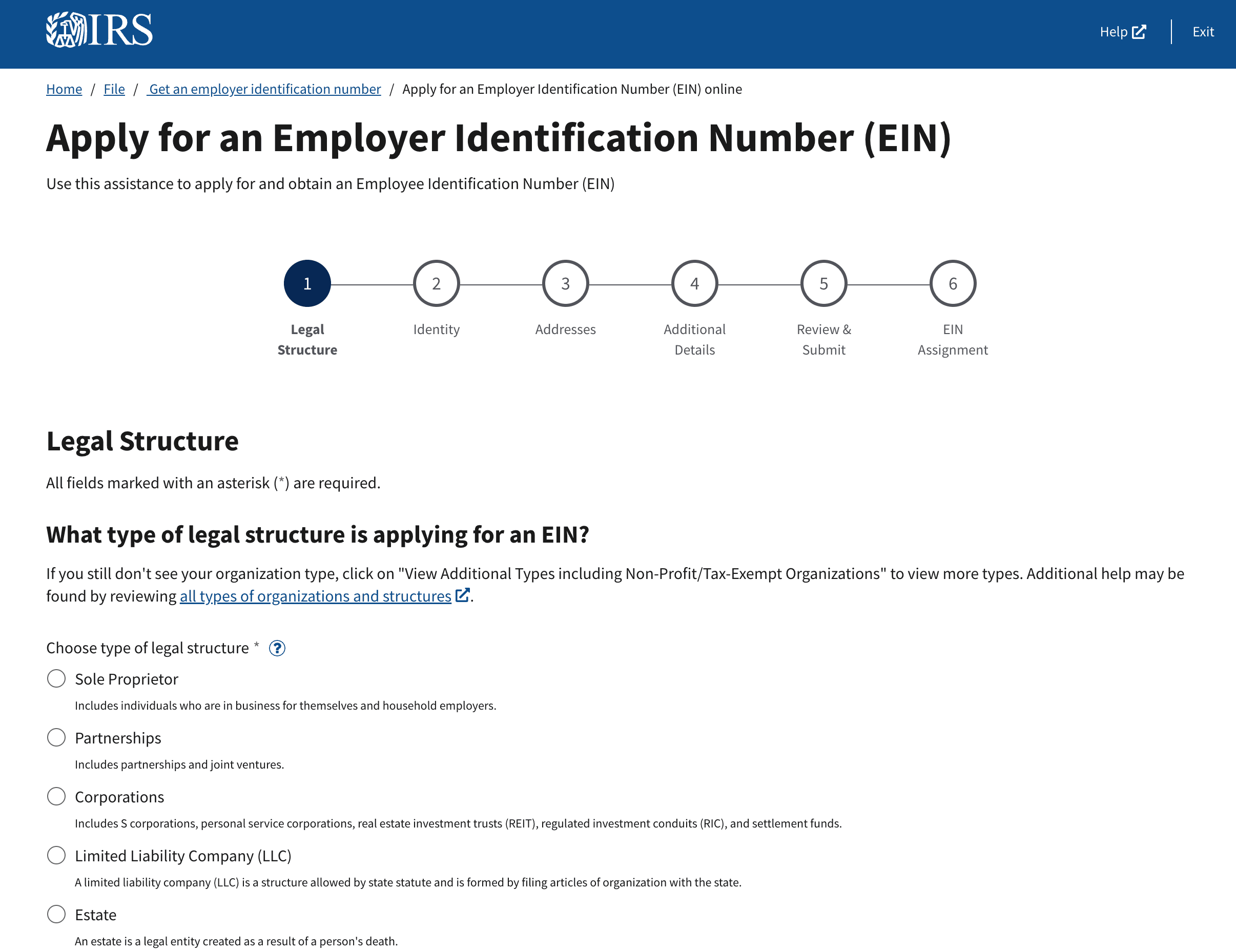
Selecting the right business structure is important for tax purposes and liability protection. Most tutoring businesses benefit from forming an LLC (Limited Liability Company), which provides personal asset protection while maintaining tax flexibility. LLCs are relatively inexpensive to set up and don't require the complex reporting that corporations do.
Sole proprietorships are simpler and cheaper to start, but they don't provide liability protection. If a student gets injured during a session or a parent decides to sue over academic results, your personal assets could be at risk. For most tutoring businesses, the extra cost of an LLC is worth the protection.
Your niche selection is equally important. Generalist tutors often struggle to stand out and command premium rates. Instead, focus on specific areas where you have genuine expertise and passion.
High-demand niches for October 2025 include:
STEM subjects (math, science, engineering): These consistently command higher rates due to perceived difficulty and strong job market demand
Test preparation (SAT, ACT, GRE, GMAT): Premium pricing potential with clear, measurable outcomes
Language learning: Growing demand for Spanish, Mandarin, and English as a Second Language
Special needs support: Specialized knowledge allows for premium pricing and strong referral networks
Consider your background, credentials, and genuine interests when choosing your niche. A former engineer tutoring calculus will have more credibility than someone who just happens to be good at math. Parents pay premium rates for expertise and proven results.
Your niche also affects your marketing strategy and target audience. Test prep tutors might focus on high school students and their parents, while business English tutors might target working professionals. This focus makes your marketing more effective and helps you build a reputation in a specific community.
3. Calculate Your Startup Costs and Financial Requirements
Understanding your startup costs helps you plan realistically and avoid cash flow problems in your first few months. Fortunately, is that tutoring businesses have relatively low barriers to entry compared to most other ventures.
For online tutoring businesses, you can start for as little as $1,000 to $5,000. This covers a reliable computer, high-quality webcam and microphone, stable internet connection, and basic software subscriptions. You'll also need to budget for website development, initial marketing efforts, and business registration fees.
Business Model | Low End | High End | Key Expenses |
|---|---|---|---|
Online Only | $1,000 | $5,000 | Equipment, software, marketing |
Home-Based | $2,000 | $8,000 | Materials, furniture, insurance |
Rented Space | $10,000 | $25,000 | Deposits, furniture, utilities |
Tutoring Center | $25,000 | $100,000+ | Commercial lease, staff, equipment |
Physical tutoring operations require much more investment. If you're planning to rent dedicated space, you'll need security deposits (typically 2-3 months rent), furniture, educational materials, signage, and higher insurance coverage. Commercial spaces also come with utility deposits and often require business improvements to meet local codes.
Don't forget ongoing monthly expenses. These include software subscriptions, insurance premiums, marketing costs, and professional development. Many new tutoring business owners underestimate marketing costs, but you should budget at least $500-$1,000 monthly for advertising and promotional activities in your first year.
Consider seasonal fluctuations in your financial planning. Tutoring demand typically peaks during the school year and drops sharply during summer months. Having 3-6 months of operating expenses saved can help you weather these natural cycles.
Professional liability insurance is important and typically costs $200-$500 annually for basic coverage. This protects you if a student claims your tutoring caused academic harm or if there are allegations of inappropriate conduct.
4. Set Competitive Pricing for Your Tutoring Services
Pricing your tutoring services correctly balances attracting customers with maintaining profitability. Research shows that tutoring rates vary widely based on subject matter, tutor credentials, geographic location, and service delivery method.
For October 2025, typical hourly rates for core subjects like math, science, and English range from $27 to $55 per hour. However, specialized subjects command premium pricing. Test preparation tutors often charge $80 to $110 per hour, while advanced subjects like calculus or organic chemistry can reach $75 to $90 per hour.
Online tutoring typically prices 10-20% lower than in-person sessions due to reduced overhead and increased competition. However, online tutors can often serve more students due to eliminated travel time, potentially increasing overall earnings.
Geographic location greatly impacts pricing. Tutors in major metropolitan areas like New York, San Francisco, or Washington DC can charge 30-50% more than those in smaller cities or rural areas. Research local competitors to understand your market's pricing expectations.
Consider offering package deals to encourage longer-term commitments. Many successful tutors offer discounts for purchasing multiple sessions upfront. For example, you might charge $50 per hour for individual sessions but offer 10 sessions for $450, providing both savings for students and predictable income for you.
Value-based pricing works well for specialized services like test preparation. Instead of charging purely by the hour, you might offer complete SAT prep packages for $1,200-$2,000, including practice tests, personalized study plans, and progress tracking. This approach often generates higher revenue per student while providing clear value propositions for parents.
Don't undervalue your expertise. New tutors often price too low, thinking it will attract more customers. However, extremely low prices can signal poor quality to parents who are already investing heavily in their children's education. Start with competitive rates and increase them as you gain experience and positive reviews.
5. Develop Your Marketing Strategy to Attract Students
Effective marketing for tutoring businesses focuses on building trust and showing results. Parents are making major investments in their children's education, so they need confidence in your abilities and approach.
Local SEO should be your foundation. Most parents search for tutors using terms like "math tutor near me" or "SAT prep [city name]." Optimize your Google My Business listing with accurate information, regular posts, and encourage satisfied parents to leave reviews. Local SEO often provides the highest ROI for tutoring businesses.
Social media marketing works well when focused on educational content rather than direct promotion. Share study tips, explain difficult concepts, or post success stories (with permission). Facebook and Instagram are particularly effective for reaching parents, while TikTok can help you connect with teenage students directly.
Referral programs are incredibly powerful in the tutoring industry. Satisfied parents often know other families facing similar academic challenges. Offer incentives like free sessions or account credits for successful referrals. Word-of-mouth recommendations carry more weight than any advertisement.
Partner with local schools, libraries, and community centers. Many schools maintain lists of recommended tutors, and librarians often field requests for tutoring recommendations. Building these relationships takes time but provides steady referral sources.
Content marketing builds your expertise and improves search engine visibility. Write blog posts about study strategies, create helpful videos, or develop free resources like study guides. This content attracts potential customers while showing your knowledge and teaching ability.
Don't neglect traditional marketing entirely. Flyers at coffee shops, community bulletin boards, and local newspapers can still be effective, especially in smaller communities. The key is tracking which marketing channels generate actual customers so you can focus your efforts and budget on what works.
6. Choose Important Business Management Software and Tools
The right technology stack can make the difference between a chaotic, stressful tutoring business and a smooth, profitable operation. Modern tutoring businesses need integrated solutions that handle scheduling, billing, communication, and student progress tracking.
Your core needs include automated scheduling that prevents double-bookings and allows students to book sessions independently. Look for systems that handle recurring appointments, send automatic reminders, and integrate with popular calendar applications. Manual scheduling becomes unmanageable once you have more than a few regular students.
Payment processing integration is important for consistent cash flow. The best systems allow automatic billing, accept both credit cards and bank transfers, and handle different pricing structures like package deals or monthly subscriptions. Chasing payments manually wastes time and creates awkward conversations with parents.
Communication tools should centralize all interactions with students and parents. This includes messaging features, progress reports, and automated notifications about schedule changes or upcoming sessions. Clear communication builds trust and reduces administrative headaches.
Student progress tracking helps you show value and identify areas needing attention. Look for features that allow lesson notes, assignment tracking, and progress reporting that you can share with parents and students.
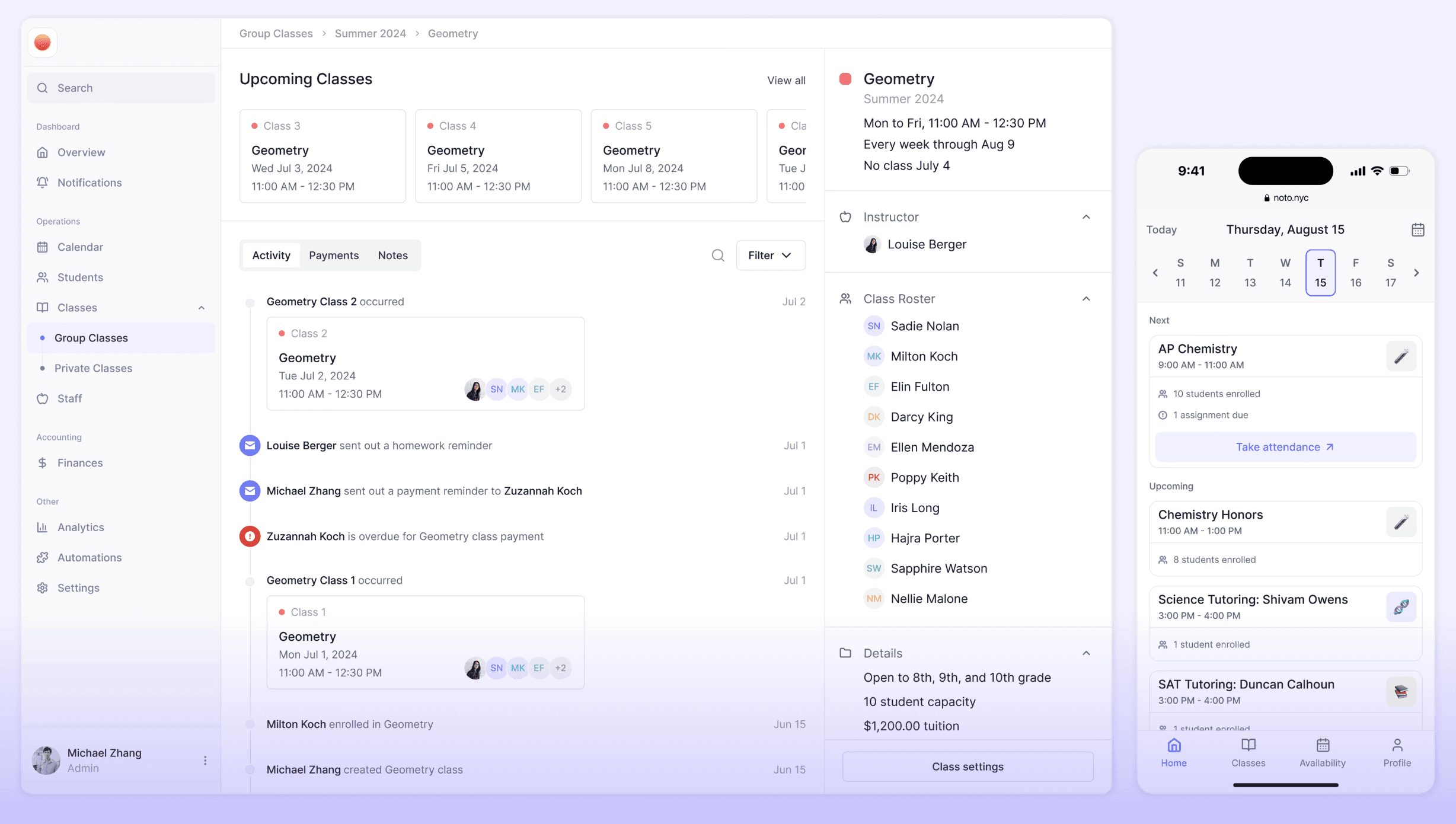
Noto consolidates all these functions into one complete system designed for lesson-based businesses like tutoring services. Instead of juggling multiple software subscriptions and dealing with integration headaches, Noto provides scheduling, billing, CRM, and communication tools in a single solution.
The system includes features particularly valuable for tutoring businesses, such as automated review collection to build your online reputation, direct bank payment options that reduce processing fees, and staff management tools that become important as you scale beyond solo operations.
Many tutoring businesses start with basic tools like Google Calendar and PayPal, but quickly outgrow these solutions as they add students and complexity. Investing in proper management software early prevents the headaches of migrating data and retraining customers on new systems later.
7. Scale and Optimize Your Tutoring Operations
Growing beyond a solo tutoring practice requires systematic approaches to maintain quality while increasing capacity. The most successful tutoring businesses develop standardized processes that work regardless of which tutor is delivering the service.
Hiring additional tutors is often the first scaling step, but it comes with new challenges. You need consistent hiring criteria, training programs, and quality control measures. Develop clear job descriptions that specify both subject expertise and soft skills like communication and patience. Remember that parents are trusting you with their children's education, so thorough background checks and reference verification are important.
Create standardized lesson plans and teaching materials that all tutors can use. This provides consistent quality and makes it easier to substitute tutors when needed. Many successful tutoring businesses develop proprietary curricula that become competitive advantages and allow premium pricing.
Implement systems for monitoring tutor performance and student satisfaction. Regular check-ins with parents, student progress tracking, and peer observations help maintain quality standards. Handle performance issues quickly before they affect your reputation.
Consider different growth models based on your goals and market. Some tutoring businesses focus on premium, high-touch services with limited capacity but higher margins. Others scale through volume, serving more students with standardized programs and competitive pricing.
Technology becomes even more critical as you scale. Manual processes that work for 10 students become impossible with 50 or 100. Automated scheduling, billing, and communication systems free up time for higher-value activities like curriculum development and business strategy.
Multi-location expansion requires additional considerations like staff management across sites, consistent branding, and more sophisticated financial tracking. Noto's Enterprise features handle these needs with multi-location payroll, advanced financial dashboards, and franchise support tools.
Don't scale too quickly. Rapid growth can strain your systems and compromise quality, potentially damaging the reputation you've worked hard to build. Focus on sustainable growth that maintains the standards that made your business successful initially.
FAQ
Do you need a license to start a tutoring business?
Most states don't require a special tutoring license, but you'll need basic business registration including a business name registration, general business license from your city or county, and a tax ID number from the IRS. Requirements vary by location, so check with your local Small Business Administration office for specific regulations in your area.
How much does it cost to start a tutoring business from home?
Home-based tutoring businesses typically require $2,000 to $8,000 in startup costs, covering materials, furniture, insurance, and basic equipment. Online-only tutoring can start for as little as $1,000 to $5,000, primarily for quality equipment and software subscriptions.
What should I charge per hour for tutoring services?
Tutoring rates vary widely by subject and location, with core subjects like math and English ranging from $27 to $55 per hour in 2025. Specialized subjects command premium pricing: test preparation tutors often charge $80 to $110 per hour, while advanced subjects like calculus can reach $75 to $90 per hour.
How do I find my first tutoring students?
Focus on local SEO by optimizing your Google My Business listing and encouraging reviews from satisfied parents. Build relationships with local schools, libraries, and community centers for referrals, and create educational content that shows your expertise while improving your online visibility.
Final thoughts on launching your tutoring business
Starting a tutoring business doesn't have to be overwhelming when you break it down into manageable steps. The combination of low startup costs, flexible scheduling, and growing demand makes this an attractive opportunity for educators and subject experts. Getting your systems right from the beginning will save you countless headaches as you grow, especially for scheduling and payments. Whether you're just getting started or ready to scale, understanding how to start a tutoring business properly sets the foundation for long-term success.