

You've probably wondered how to design a tutoring lesson plan that actually gets results instead of just winging it every time. Successful tutors all share one thing in common: they never show up unprepared.
Whether you're running your own tutoring business or just starting out as an independent tutor, having a solid lesson plan template is the difference between chaos and consistent results.
TLDR:
Structure tutoring sessions with 5 core components: clear objectives, pre-assessment, instruction, guided practice, and progress evaluation to increase engagement
Use SMART goals (specific, measurable, achievable, relevant, time-bound) to improve student outcomes by 25% compared to general learning goals
Follow proven time structures: 30-min sessions need 5-min warm-up/20-min instruction/5-min wrap-up for maximum effectiveness
Adapt online sessions with interactive elements every 5-7 minutes and backup plans for technology failures
Track progress systematically using both formative and summative assessments to show concrete improvement to parents
Key Components of Effective Tutoring Lesson Plans
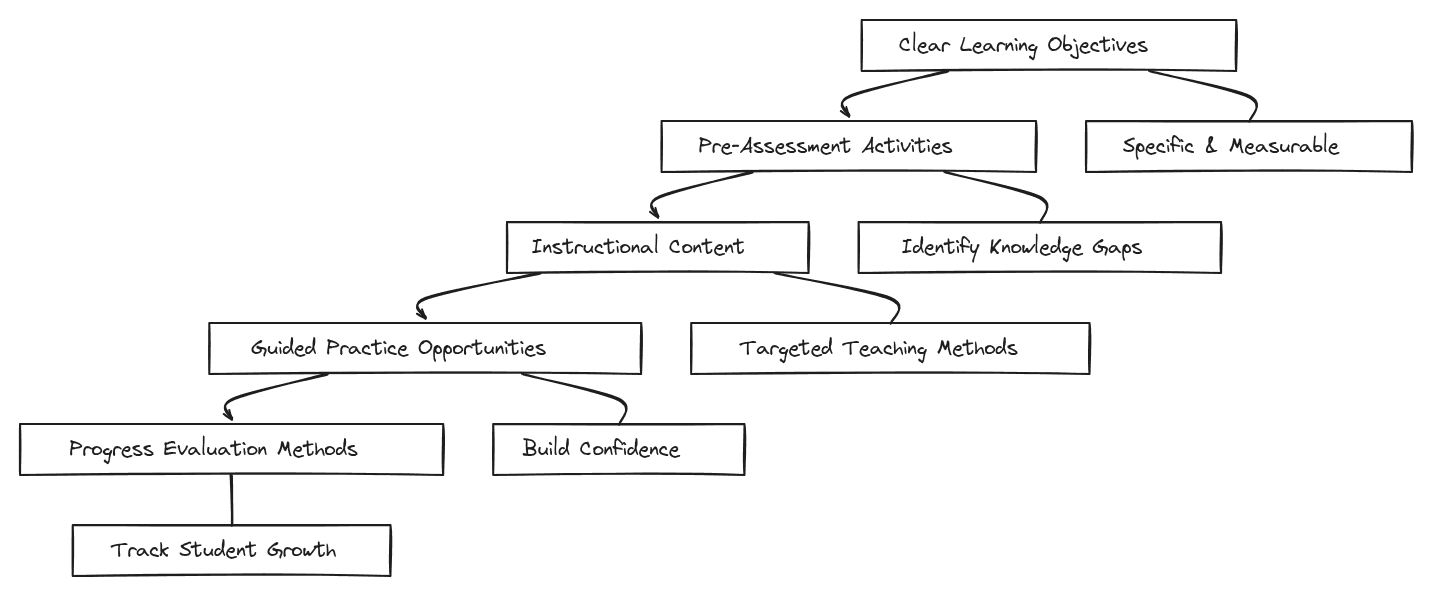
Every effective tutoring session starts with a well-structured plan, a roadmap that guides both you and your student toward clear learning outcomes. The strongest lesson plans include five core components: specific objectives, pre-assessment, instruction, guided practice, and progress evaluation. Together, these elements create a focused learning experience that builds on prior knowledge while introducing new concepts.
A well-structured lesson plan reduces preparation time by 40% and increases student engagement by making every minute serve a purpose.
Start with specific, measurable goals (for example, “solve three-step algebraic equations with 80% accuracy”) to define success clearly. Use pre-assessments such as quick quizzes or review questions to gauge current understanding before introducing new material. During instruction, focus on one or two key concepts and demonstrate problem-solving techniques. Guided practice then lets students apply new skills with your support, while progress evaluation confirms mastery and identifies next steps. Stanford's tutoring guidelines show that consistent evaluation creates accountability for both tutor and student.
Setting Clear Learning Objectives and Goals
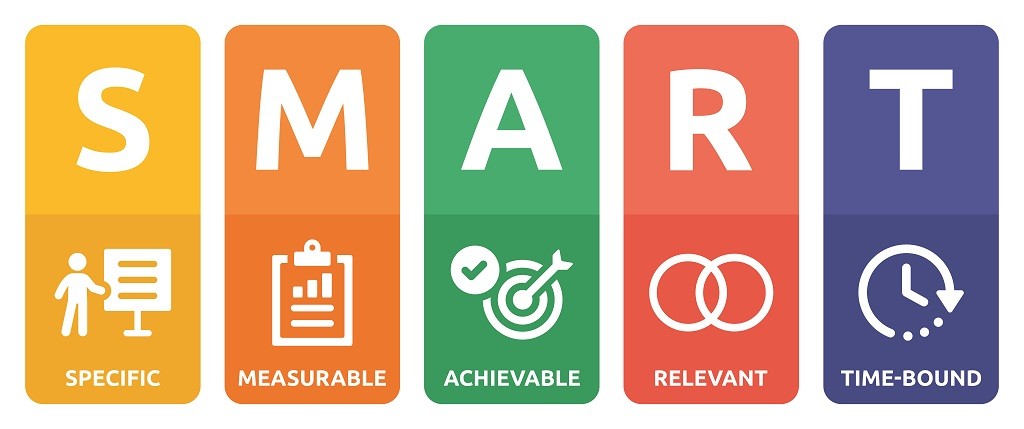
SMART goals turn vague tutoring sessions into focused, results-driven learning. By setting Specific, Measurable, Achievable, Relevant, and Time-bound objectives, you create clear expectations and trackable progress for both you and your students.
Write goals that define success clearly, such as “complete 15 multiplication problems with 90% accuracy in 10 minutes.” Keep them achievable to maintain motivation and relevant to the student’s broader academic needs, like upcoming tests or long-term skills. Adding a time frame, for example mastering a concept by the end of the session, builds focus and accountability.
Educational goal-setting research shows that students who work toward specific objectives improve more than those with general learning goals. For younger students, this might mean “read 20 sight words correctly,” while older students might “analyze literary themes in two texts” or “balance chemical equations with 85% accuracy.”
Creating Your Pre-Session Preparation Checklist
Consistent preparation sets professional tutors apart. A simple checklist ensures you're ready for every session, no matter how busy the day.
Begin by reviewing notes from the previous session to identify progress, lingering questions, and homework outcomes. Gather all materials, including textbooks, worksheets, supplies, and digital resources, before the lesson starts to keep sessions smooth and focused.
Prepare activities and examples ahead of time, such as real-world math problems or model essays, to maximize instructional quality. Set up a distraction-free environment with good lighting and reliable technology, and have a backup plan for online sessions.
Finally, check any recent parent or teacher feedback, then create a brief agenda to share with your student at the start. Clear preparation builds continuity, confidence, and consistency in every tutoring session.
Your preparation checklist should include:
Reviewing previous session notes (5 minutes)
Gathering materials and resources (10 minutes)
Preparing activities and examples (15 minutes)
Setting up your environment and testing technology (5 minutes)
Checking parent or teacher feedback and creating an agenda (5 minutes)
Structuring Your Tutoring Session Timeline
Effective time management shapes every successful tutoring session. While session lengths vary, all benefit from a consistent structure that balances engagement and learning.
For shorter 30-minute sessions, keep the focus tight: a brief warm-up, focused instruction, and a quick wrap-up. For 45-minute sessions add time for guided and independent practice, and allow for deeper exploration and application with 60-minute sessions.
Session Length | Warm-up | Instruction | Independent Work | Wrap-up |
|---|---|---|---|---|
30 minutes | 5 min | 20 min | 0 min | 5 min |
45 minutes | 7 min | 28 min | 5 min | 5 min |
60 minutes | 10 min | 35 min | 10 min | 5 min |
Warm-up helps students shift into learning mode and review key concepts
Instruction introduces new material and uses the “I do, we do, you do” approach to build confidence
Independent work lets students apply skills on their own while you observe and guide as needed
Wrap-up reinforces what was learned and outlines next steps
Creating Your Own Lesson Plan Template
Knowing how to create a lesson plan is key to running organized, effective tutoring sessions. A clear tutoring lesson plan template removes the guesswork and helps you stay focused on your student’s goals.
Start with a simple structure that works across subjects to keep consistency and measurability across sessions:
Session date
Student name
Learning objectives
Materials needed
Session timeline
Activities
Assessments
Homework
Notes for next time
When designing your tutoring lesson plan template, customize it to your subject area. For example, math tutors can include sections for common mistakes and practice goals, science tutors may add space for experiment notes or diagrams, and reading and writing tutors can track comprehension, vocabulary, and writing progress. For test prep, include strategy work, practice results, and skill-building goals.
Choose a format that fits your workflow. A digital tutoring lesson plan template makes it easy to update, share, and organize student records, while printable versions are great for quick handwritten notes. The goal is to build a consistent system that supports planning, accountability, and measurable results in every session.
Adapting Plans for Online vs In-Person Sessions
Whether online or face-to-face, effective tutoring relies on structure and engagement. While learning goals stay the same, your delivery should adapt to the environment.
Online sessions demand more frequent check-ins to confirm student attention and understanding. Plan interactive elements every 5-7 minutes instead of the 10-15 minute intervals that work in person. Use polls, quick quizzes, or verbal responses to keep students engaged.
Technology becomes both a tool and a potential distraction in virtual sessions. Prepare backup activities that don't rely on screen sharing or specific software. Have phone numbers ready in case video connections fail.
Visual aids gain importance online since you can't easily point to physical materials. Create clear, large-font presentations and use annotation tools to highlight key information. Share your screen strategically to focus attention on specific content.
In-person sessions allow for more hands-on activities and immediate feedback. You can observe body language, provide physical manipulatives, and create collaborative activities that are harder to replicate online.
Both formats benefit from clear structure and consistent routines. Students need to know what to expect regardless of how they're receiving instruction. The most important thing to remember as a tutor is: your personal connection with your students is your most valuable asset to keeping them engaged and learning effectively.
Assessment and Progress Tracking Methods
Measuring student progress requires systematic approaches that go beyond gut feelings. Effective assessment combines formal and informal methods to create a complete picture of learning.
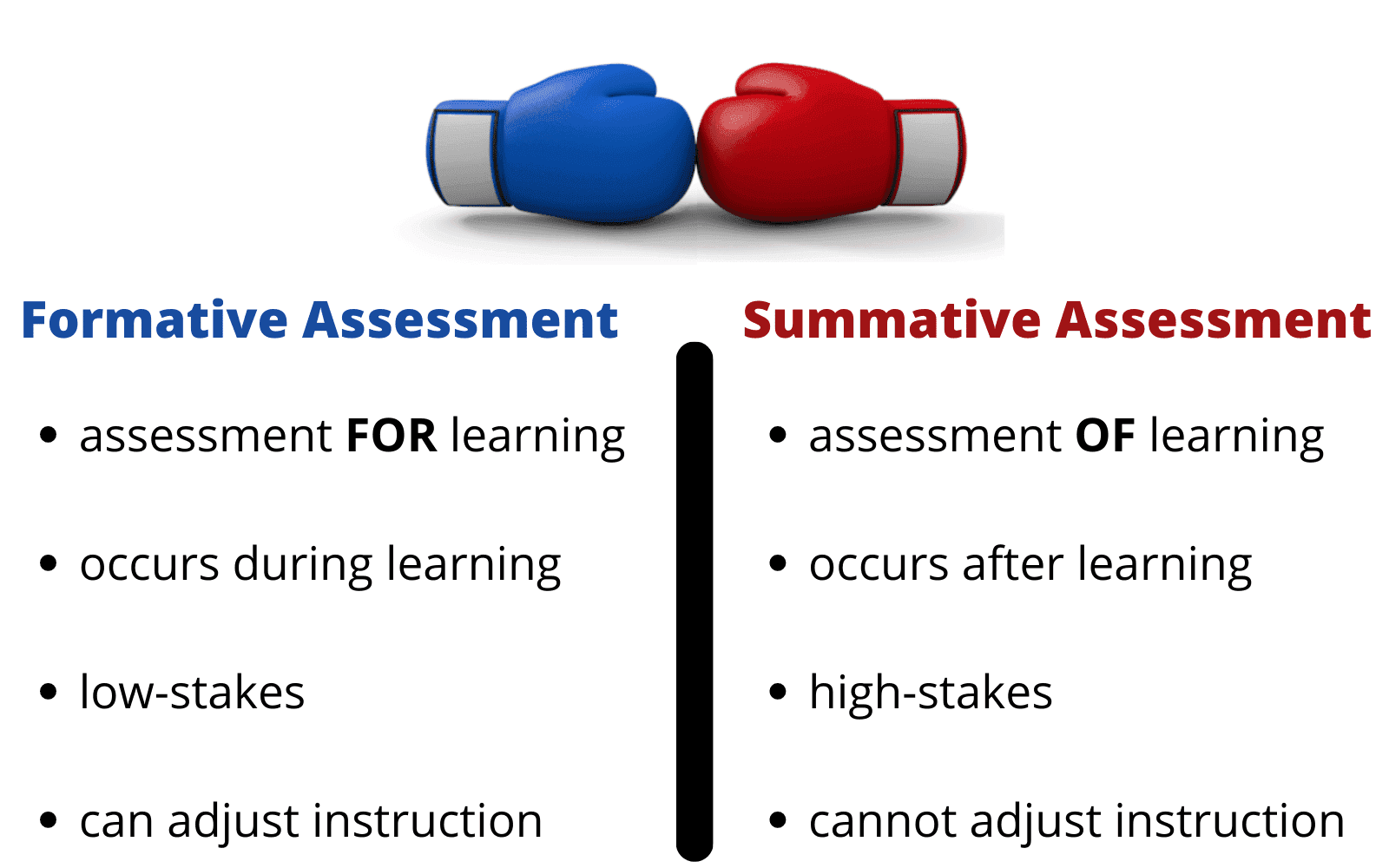
Formative assessments happen during instruction and help you adjust your teaching in real-time. These might include exit tickets, quick verbal checks, or brief practice problems. The goal is understanding, not grading.
Summative assessments measure learning at the end of units or sessions. These include quizzes, projects, or complete reviews that show mastery of specific objectives.
Document progress to plan future sessions, communicate with parents, and show the value of your tutoring services. Track concepts covered, skills mastered, and areas needing support. When sharing results, use concrete data, for example, “Sarah improved her fraction accuracy from 60% to 85%.”
Regular reviews reveal learning patterns and can help guide adjustments in your approach.
Managing Multiple Students and Group Sessions
Group tutoring requires different planning than one-on-one instruction, requiring organization, flexibility, and clear structure.
Encourage collaboration through activities like think-pair-share or rotating roles to keep all students engaged. Prepare materials at varying difficulty levels to accommodate different skill sets, and use peer support to strengthen understanding.
Use digital lesson-based tools to track individual progress efficiently and plan smooth transitions between activities. Set clear expectations and routines to manage time effectively. Rotate among students during independent work to provide personal attention while maintaining group focus.
The key is to balance group dynamics with individual needs to create a productive, inclusive learning environment.
Scaling Your Lesson Planning Process
Strong lesson plans make great sessions. But when your business grows from a few students to dozens, consistency becomes harder to manage. What once depended on a single tutor’s preparation now relies on coordination across people, schedules, and systems. The challenge shifts from how to plan a lesson to how to make lesson planning work at scale.
That is where Noto helps. Built for lesson-based businesses, Noto organizes everything behind the scenes from scheduling and billing to communication and progress tracking so tutors can focus on teaching. Each session, payment, and update lives in one connected workspace that everyone can access.
With Noto, new tutors onboard faster, administrators gain visibility into lessons, and families receive consistent communication. The shared calendar prevents conflicts, automated billing removes manual follow-up, and progress notes give clear context from one session to the next. These systems work quietly in the background, supporting the structure that keeps every student’s learning experience consistent.
As your business expands, this foundation becomes your advantage. Centralized data replaces scattered tools, and communication stays clear because everyone works from the same information. You save time, reduce friction, and preserve the quality that made your tutoring effective in the first place.
Scaling lesson planning is not about more paperwork. It's about systems that let great teaching scale. Noto provides that system, helping your business grow without losing its personal touch.
FAQ
How long should I spend preparing for each tutoring session?
Plan to spend about 40 minutes preparing for each session: 5 minutes reviewing previous notes, 10 minutes gathering materials, 15 minutes preparing activities and examples, 5 minutes setting up your environment, and 5 minutes creating your session agenda.
What's the difference between formative and summative assessments in tutoring?
Formative assessments happen during instruction (like exit tickets or quick verbal checks) to help you adjust teaching in real-time, while summative assessments check learning at the end of sessions or units through quizzes, projects, or complete reviews that show mastery.
How should I structure a 45-minute tutoring session?
Allocate 7 minutes for warm-up and review, 28 minutes for focused instruction and guided practice, 5 minutes for independent work where students apply new knowledge, and 5 minutes for wrap-up and planning next steps.
When should I adapt my lesson plan during a session?
Adjust your plan when you notice student disengagement, realize the difficulty level doesn't match their current abilities, or if they're grasping concepts faster or slower than expected. Flexibility is key to maintaining productive learning.
Final thoughts on creating effective tutoring lesson plans
Having a solid lesson plan template changes every tutoring session from guesswork into purposeful learning. The structure, timing, and assessment methods we've covered give you the foundation to deliver consistent results for your students. When you master how to structure a tutoring session, you're teaching better and building the kind of tutoring practice that creates real academic breakthroughs. Your students will notice the difference, and so will their parents.