
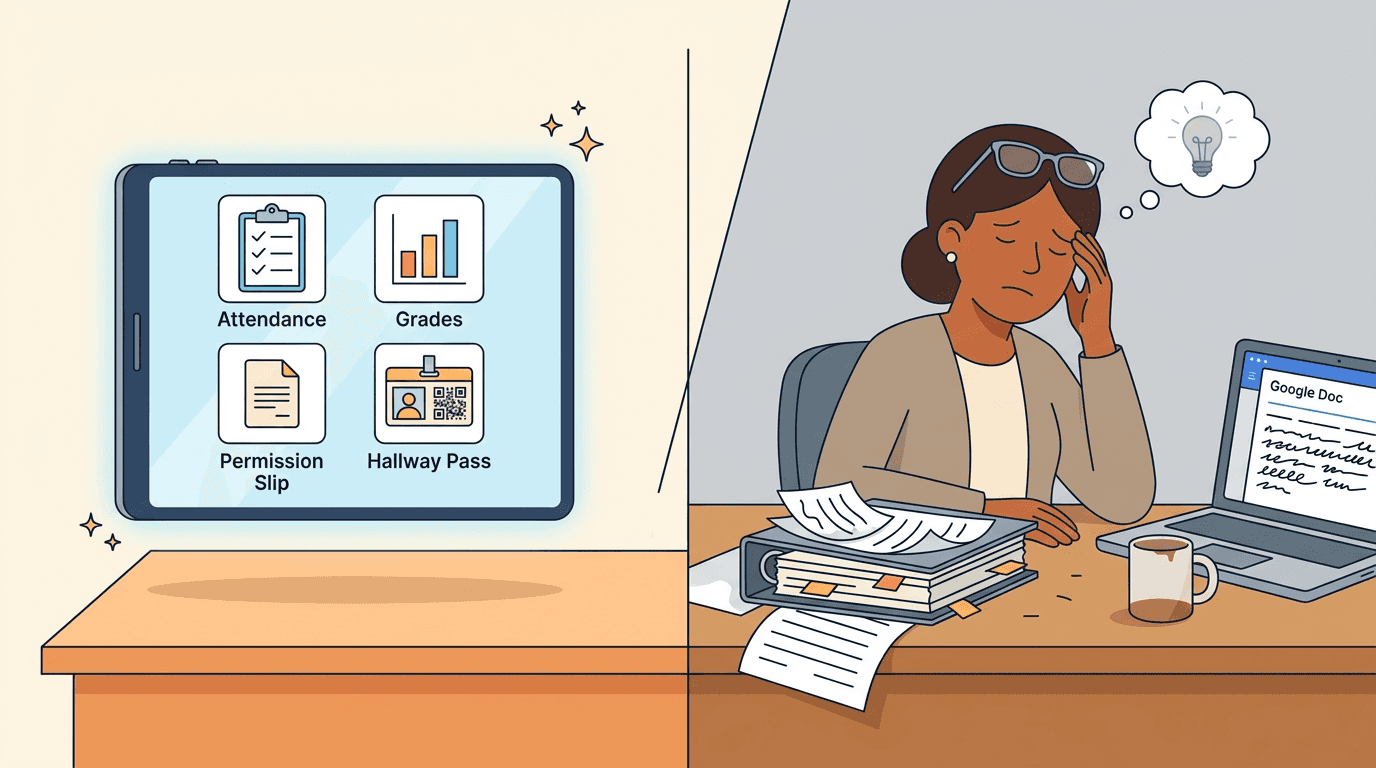
Walk into most schools now and you'll find a district that's digitized everything: attendance, grades, permission slips, even hallway passes.
Ask that same district what tool a teacher uses to plan Tuesday's lesson, and you'll often get a shrug, a battered binder, or a Google Doc nobody standardized. That gap isn't a minor oversight.
It's the one workflow districts forgot to modernize, and it's quietly driving teachers out the door. Here's what changes when planning finally gets treated like real infrastructure.
The One Workflow No One Digitized
Walk into any school office and you'll find a dashboard for almost everything: attendance, grades, enrollment, even hallway passes.
Ask where teachers plan their lessons, though, and you'll likely get a shrug, or a nod toward a shared drive folder nobody ever organized.
What got digitized and what got skipped
Every task with a clear institutional owner eventually got its own software.
Admissions got enrollment platforms.
Grading got gradebooks tied to the student information system (SIS).
Parent communication got apps built for exactly that purpose.
Each of these tools serves someone besides the teacher: a leader who needs a report, a parent who wants an update. Lesson planning serves only the teacher standing in front of the class, so it never had a sponsor pushing for a better tool.
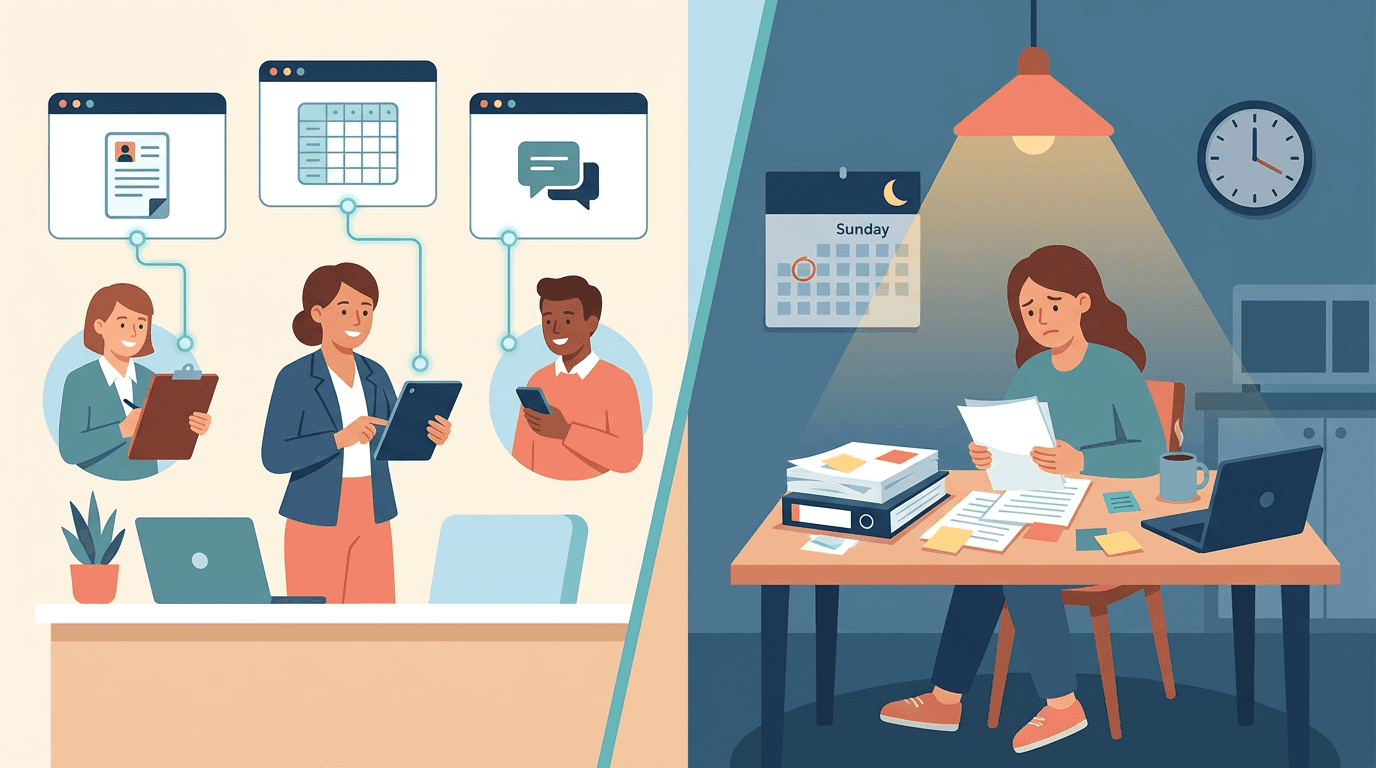
It stayed a personal DIY problem, one folder, one binder, one Sunday night at a time.
Why leaders cannot see planning time
Here's the catch: what gets measured gets managed, and planning leaves no trace. There's no timestamp, no login, no audit trail a principal can pull up.
That absence makes it easy to assume planning takes an hour, when for many teachers it eats an entire weekend.
Research from RAND teacher surveys and the OECD's Teaching and Learning International Survey (TALIS) consistently points to out-of-class work as a major driver of teacher stress and attrition.
When a workload stays invisible, it never shows up in staffing decisions, budgets, or wellbeing conversations. This isn't a technology failure. It's an attention failure about where teacher time actually goes.
Why Planning Is Your Best Retention Lever
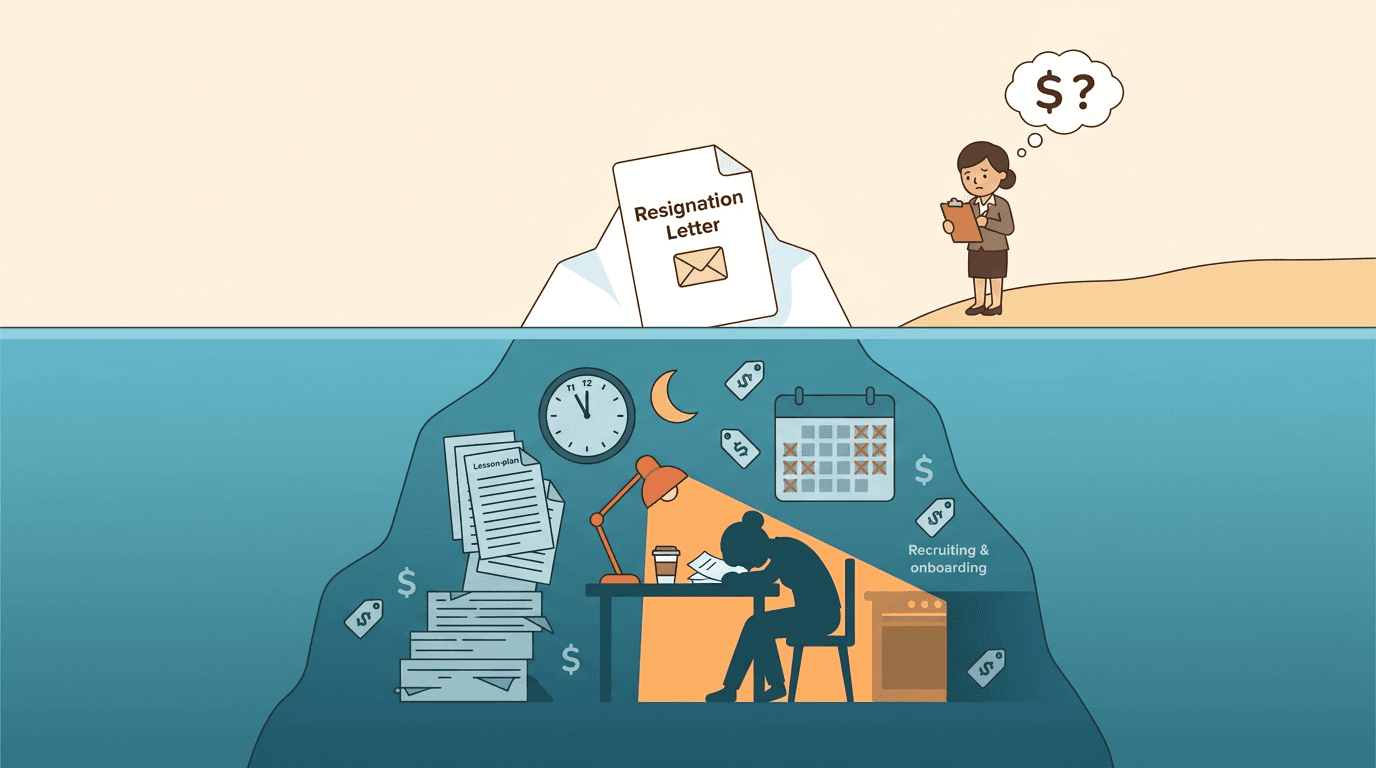
Most teachers don't walk out the door because of one rough class or one hard parent call. They leave because of the slow accumulation of unpaid, after-hours work nobody accounted for, and planning is usually the biggest piece of that pile.
The attrition math leaders miss
Replacing a teacher is expensive. Recruiting, onboarding, and the disruption to students while a new hire finds their footing all cost more than most budgets like to admit. Surveys from groups like RAND and the OECD's TALIS study point to the same pattern again and again: teachers cite workload, not students, as the reason they're heading for the exit. Planning sits at the center of that workload, quietly eating evenings and weekends long before it ever shows up as a resignation letter on your desk.
A lever you actually control
You can't rewrite the salary schedule or shrink every class size by fall. But you can change how planning happens in your building this term, and that's exactly why it's worth your attention. Whether staff lean on Google Workspace for shared docs, Notion for organizing units, Planboard for scheduling, or EMStudio for building out lesson materials faster, the specific tool matters less than the decision to give planning real structural support. Small changes, like shared templates, protected prep blocks, or common lesson banks, compound across dozens of teachers and a full school year. Unlike pay policy, this is a lever you can pull now, and it's far cheaper than another round of recruiting.
Make the Hidden Hours Visible First
You can't manage a workload you've never measured. Before any school leader can fix planning time, someone has to see it clearly, and right now, most schools are guessing.
How to run a two-week team log
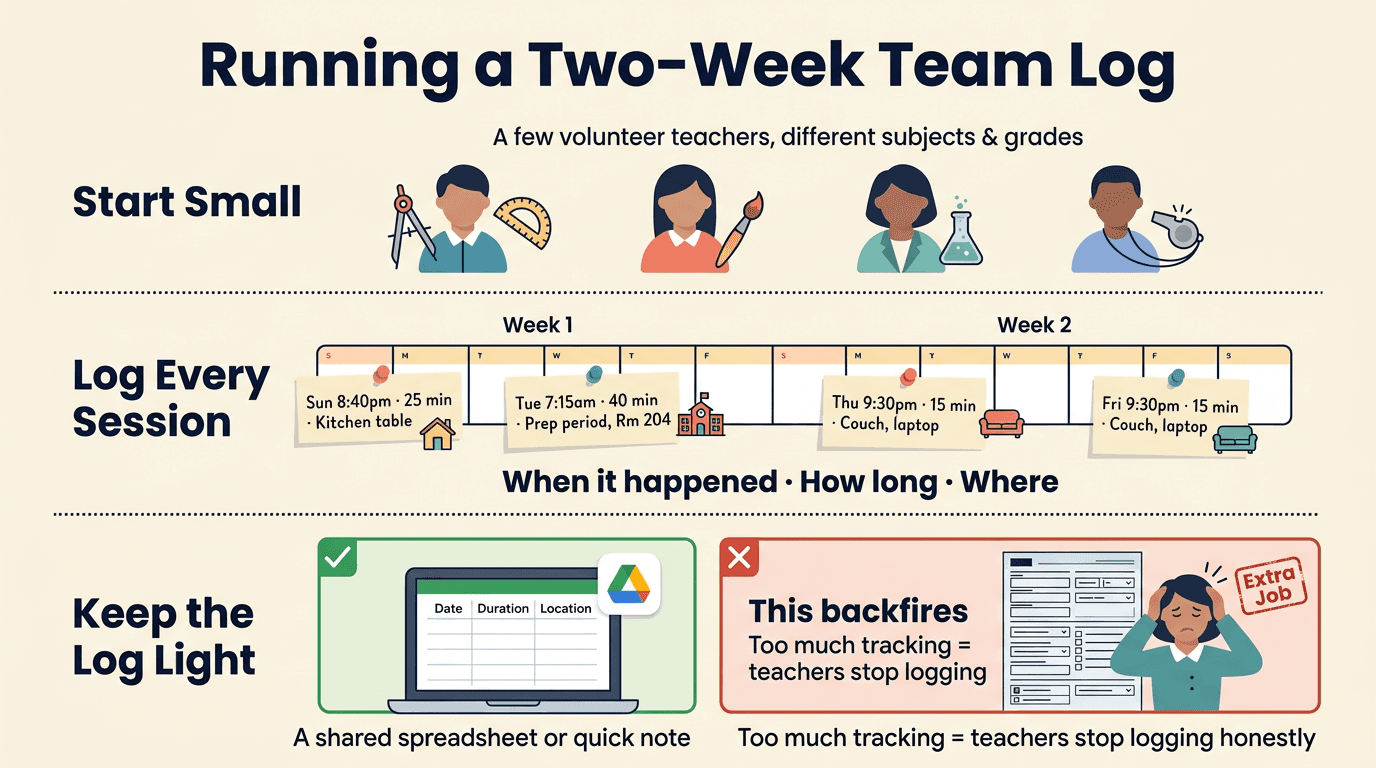
Start small.
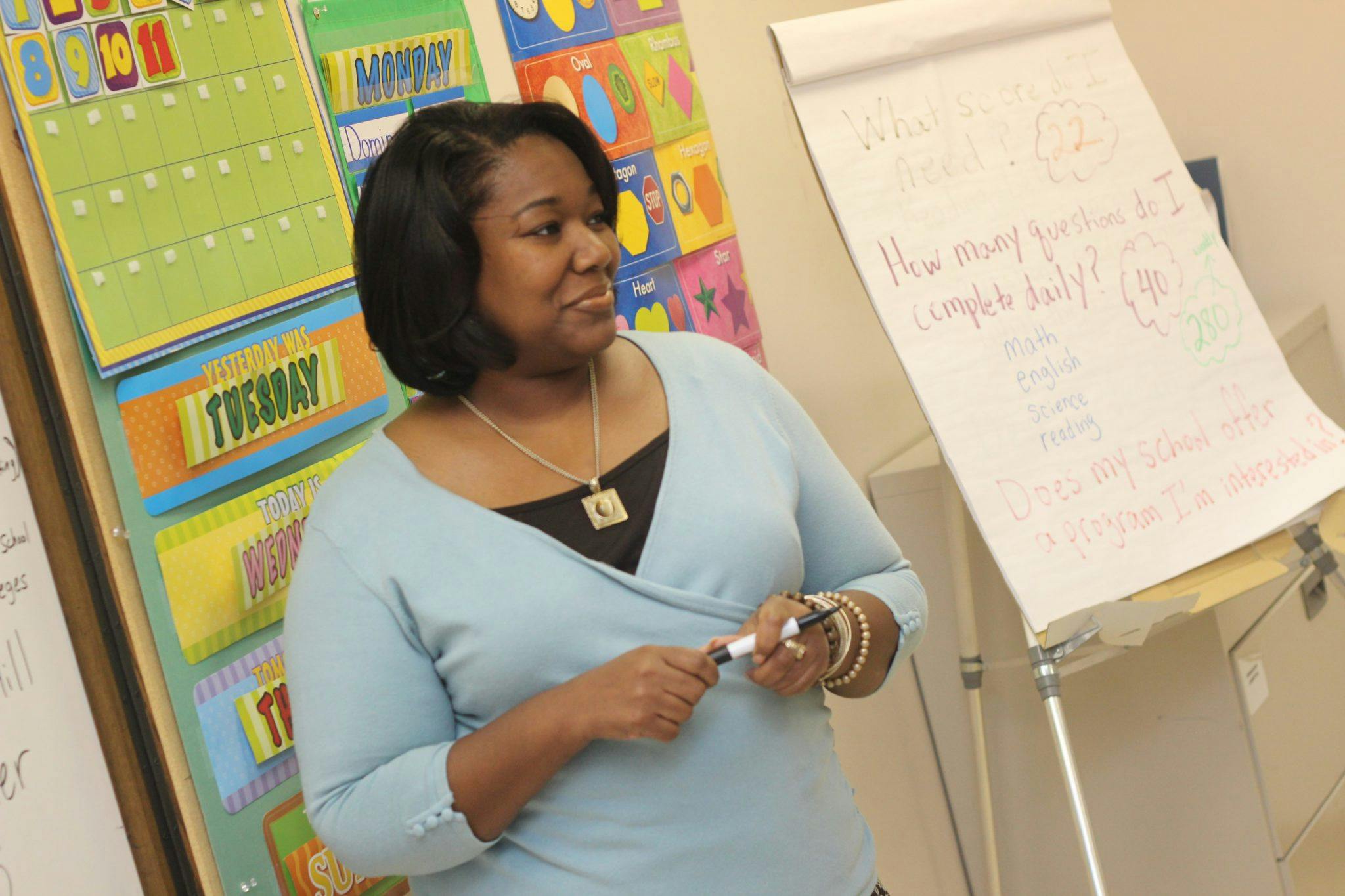
Ask a volunteer group, a few teachers spanning different subjects or grade levels, to log every planning session for two weeks: when it happened, how long it took, and where (a Sunday at the kitchen table counts as much as a Tuesday prep period).
Keep the log itself light: a shared spreadsheet or a quick note in Google Workspace works fine. The point is data, not a second job. If the tracking becomes its own burden, teachers will stop doing it honestly, and the whole exercise falls apart.
Reading the results without blame
Once the two weeks are up, look for patterns rather than individuals. Are three teachers rebuilding the same kind of lesson from scratch each week? Is planning routinely spilling past 9 p.m.?
Is the same worksheet getting reinvented every semester because nothing's saved in a shared place?
When you bring the findings back to staff, frame them as systems the school owns, not personal time-management failures. Most leaders are surprised by the totals. They assumed planning fit neatly inside contracted hours.
The log usually says otherwise, and that honest picture is what makes the next steps worth taking seriously.
Treat Planning Like Real Infrastructure
Most schools have a system for grading, attendance, and parent messages. Planning rarely gets the same treatment: it lives in whatever folder, notebook, or head a teacher prefers. Treating planning as infrastructure, not personal preference, is the fix.
Shared templates and a shared home
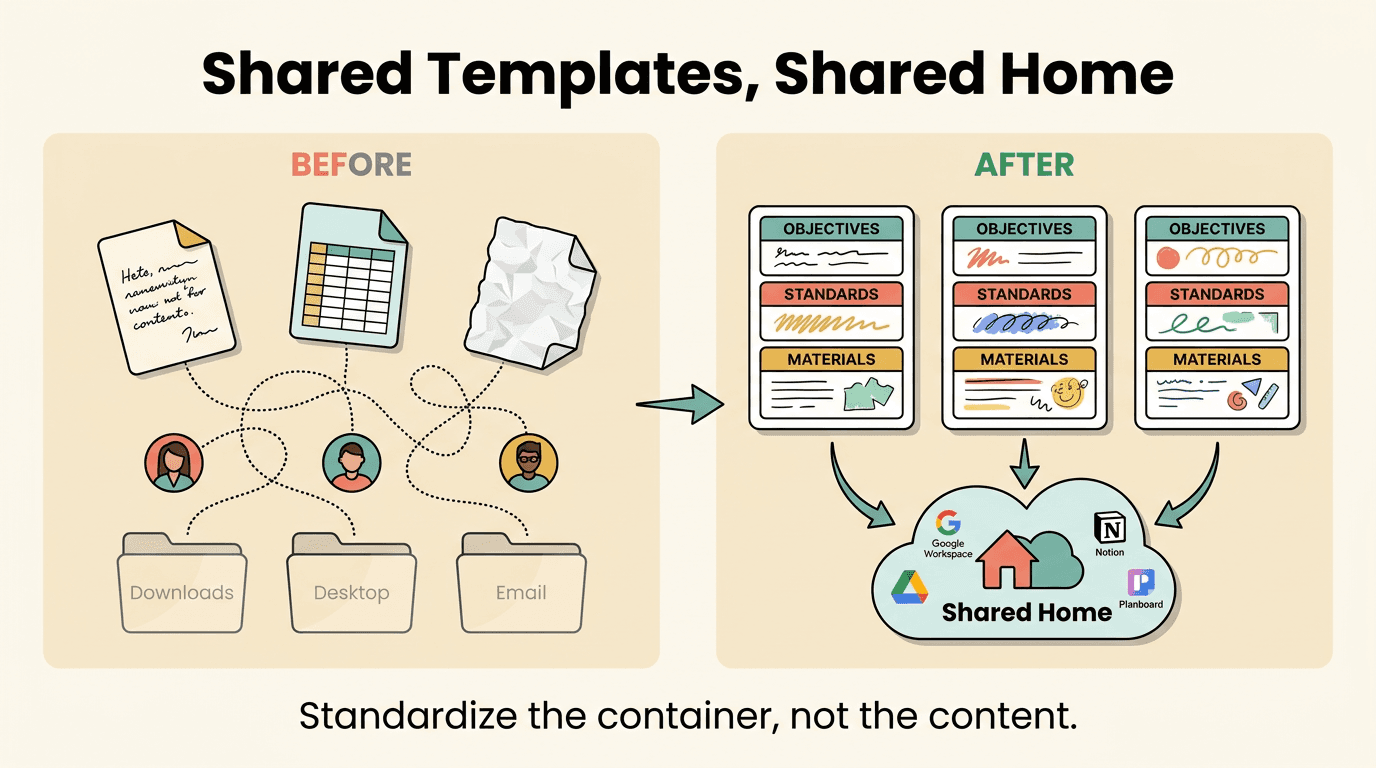
Start with a common structure: the same basic template for objectives, standards, and materials across a grade level or department. Then give it a single home so nothing gets lost in someone's downloads folder.
Standardizing the container, not the content, keeps every teacher's creativity intact while cutting the friction of rebuilding a plan from scratch each year.
Depending on your context, that shared home might be Google Workspace, Notion, or EMStudio; what matters is that it exists and everyone knows where to find it.
How one teacher handles it in practice
More teachers are moving away from scattered documents and into a dedicated lesson planning tool built to hold plans, standards, and materials together.
An app like EMStudio, for example, lets a single teacher reuse a unit's structure instead of starting cold every term.
That's the same logic school leaders should apply at scale: when planning is real infrastructure, it survives a transfer, a leave, or a resignation. The plans stay behind. They don't walk out the door with the teacher who built them.
Protect the Planning Period for Real
A planning period stops being planning time the moment it becomes overflow for everything else.
Leaders promise the block is protected, then covering classes, staff meetings, and hallway duty quietly eat it away until it's just another slot on the schedule.
The would-you-cancel-a-class test
Here's a simple test for staff to defend that time, and for leaders to hold themselves to the same standard: would this reason justify pulling a teacher out of an actual class with students in it?
If a sub shortage, a last-minute assembly, or an extra duty rotation wouldn't be worth canceling a lesson, it isn't worth canceling planning either. A third-grade teacher's planning block deserves the same respect as her literacy block.
Once staff can name that standard out loud, they stop apologizing for guarding the time, and leaders stop treating it as the easiest slot to raid.
Making protection stick
A rule only works if someone checks it. Track how often planning periods get borrowed, who borrowed them, and why, and report that back the way you would attendance or discipline data.
Patterns show up fast: one grade level losing its block every Tuesday, one duty schedule that always spills over.
The discipline has to start at the top. If an assistant principal pulls a teacher's planning period for a walkthrough debrief that could wait, staff notice, and the promise starts to feel hollow.
When leaders model the same restraint they ask of everyone else, the protection becomes credible, and planning starts reading as core work instead of the thing that bends first.
Where to Start on Monday
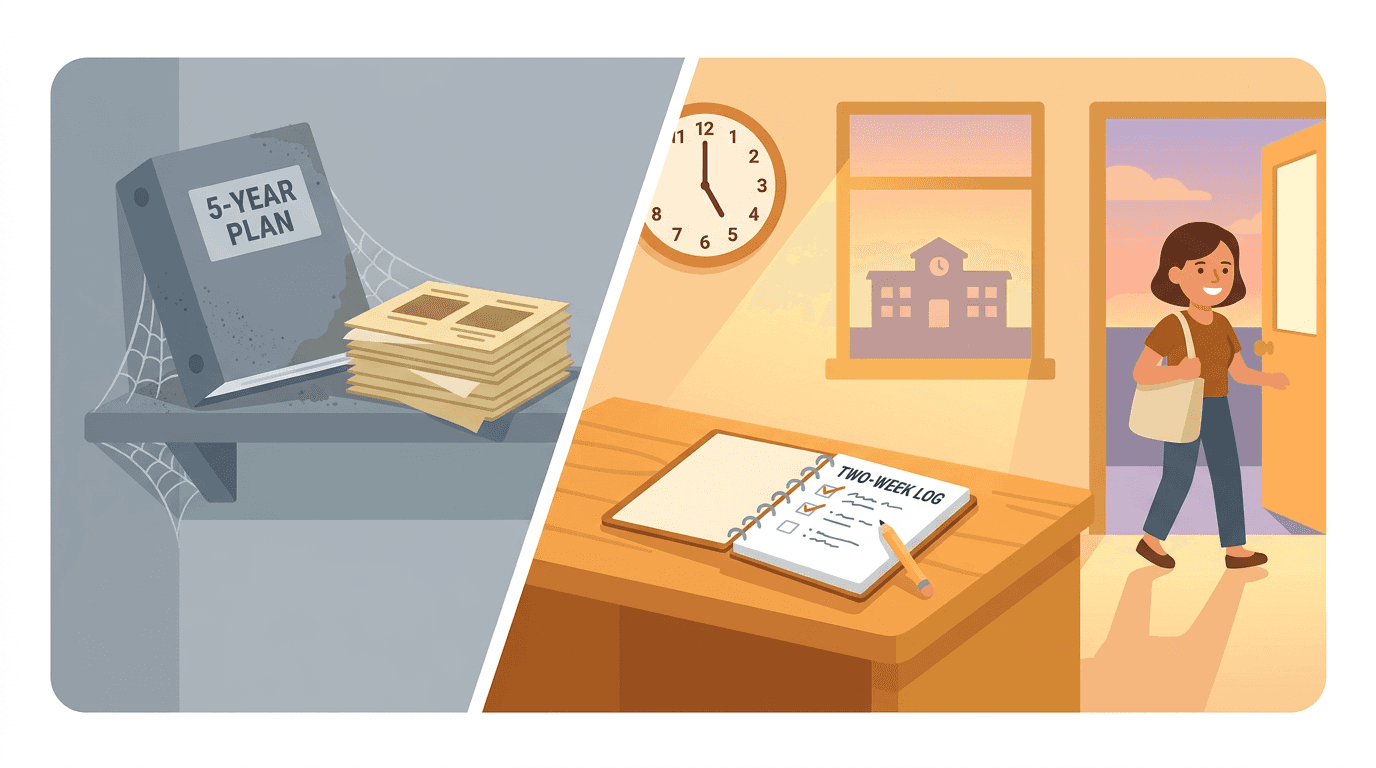
You don't need a five-year plan to fix this. You need one move you'll actually finish, not a committee that studies planning workload for a semester and produces a slide deck.
Start with the two-week log. Ask a handful of teachers, not the whole staff, to jot down what planning actually eats:
the units they're building from scratch
the resources they're hunting down
the differentiation nobody scheduled time for
Two weeks is short enough that people will actually do it, and the results are usually convincing enough on their own. Visibility is what earns you the room to make the harder changes later.
Then name an owner. Right now, planning infrastructure is everyone's job and therefore nobody's, the same way a shared drive with no folder structure belongs to whoever complained about it last.
Someone, a department chair, an instructional coach, a curriculum director, should own the shared resources, the templates, the tools like Google Workspace, Notion, Planboard, or EMStudio that your staff are already patching together on their own time.
Give that person the authority to standardize, not just suggest.
Finally, put planning workload on the same calendar as enrollment numbers and grade distributions. You already revisit those each term because you know they drift. Planning load drifts too, quietly, and it's just as worth watching.
One deliberate move, repeated every term, beats another initiative that launches in August and disappears by October.
Every other system in a school has been streamlined, tracked, and supported. Planning hasn't, and that's exactly why it's become the invisible workload pushing good teachers toward the exit.
Fixing it doesn't require a massive overhaul: districts already lean on Google Workspace for documents, Notion for shared knowledge, and Planboard or EMStudio for the planning itself. The tools exist.
What's been missing is the will to protect the time and make the hours visible. Retention isn't only about pay. Sometimes it's about giving teachers their evenings back.