You've likely spent countless hours creating detailed lesson plans, only to watch them fall apart when students need more time on a concept or technology fails mid-class. The reality is that effective music lesson planning is about creating flexible frameworks that adapt to real classroom moments while still meeting your educational goals. Fortunately, there are proven strategies and tools that can help your planning process and help you build that perfect balance between structure and spontaneity.
TLDR:
Effective music lesson plans balance clear objectives with flexibility for spontaneous learning moments
Elementary lessons generally need about 5-10 minute activity blocks while high school ones can handle much longer sessions ranging from 50-90 minutes
Private lessons require personalized frameworks that adapt to individual student needs and progress
Good planning systems can save up to 30-45 minutes weekly by using templates and organized resource libraries
Noto simplifies lesson planning by automating administrative tasks and centralizing student progress tracking
Essential Components of Music Lesson Plans
Every successful music lesson starts with a solid foundation. Whether you're teaching elementary students their first notes or guiding high schoolers through complex compositions, certain core elements remain important across all music lesson plans such as setting clear learning objectives, proper material preparation, assessment strategies, and aligning to industry standards of music instruction. The key is to create lesson plans which balance structure with flexibility, allowing for spontaneous musical moments while maintaining clear educational direction.
Clear Learning Objectives
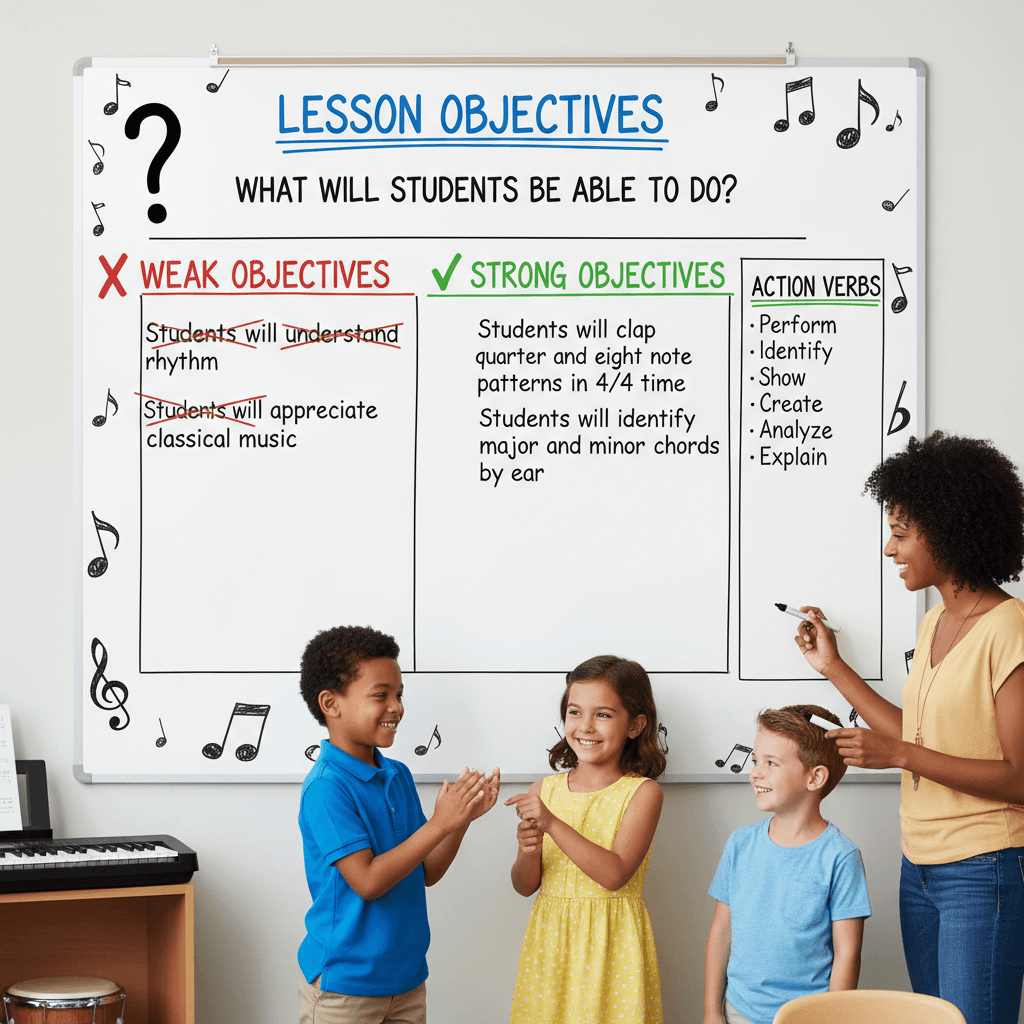
Your lesson objectives should answer one simple question: what will students be able to do by the end of class? Strong objectives use action verbs like "perform," "identify," or "show" rather than vague terms like "understand" or "appreciate."
For example, instead of "students will learn about rhythm," write "students will clap quarter and eighth note patterns in 4/4 time." This specificity helps you design activities that directly support your goals.
Material Preparation and Resources. List every item you'll need before class begins. This includes instruments, sheet music, audio equipment, and any digital resources. And given the importance that digital tools play in today's music learning, you should have backup plans for when technology fails as this will save valuable class time.
Assessment Strategies. Build assessments into your lesson structure through both formal and informal methods. Quick listening checks, peer evaluations, and exit tickets provide immediate feedback on student progress.
Standards Alignment. Connect your lessons to national or state music education standards. This alignment shows educational value and helps you track skill development across multiple lessons.
Music Lesson Plan Templates for Different Settings
Different music environments require distinct approaches to lesson planning. A kindergarten music class operates completely differently from a high school jazz ensemble, and your templates should reflect these unique needs. Below are recommendations for three common music settings: elementary classrooms, private lessons, and ensemble/band.
Elementary Classroom Templates. Elementary templates focus on short, varied activities that maintain young attention spans. Include sections for opening songs, movement activities, and instrument exploration. Build in frequent transitions and keep individual activities under 10 minutes.
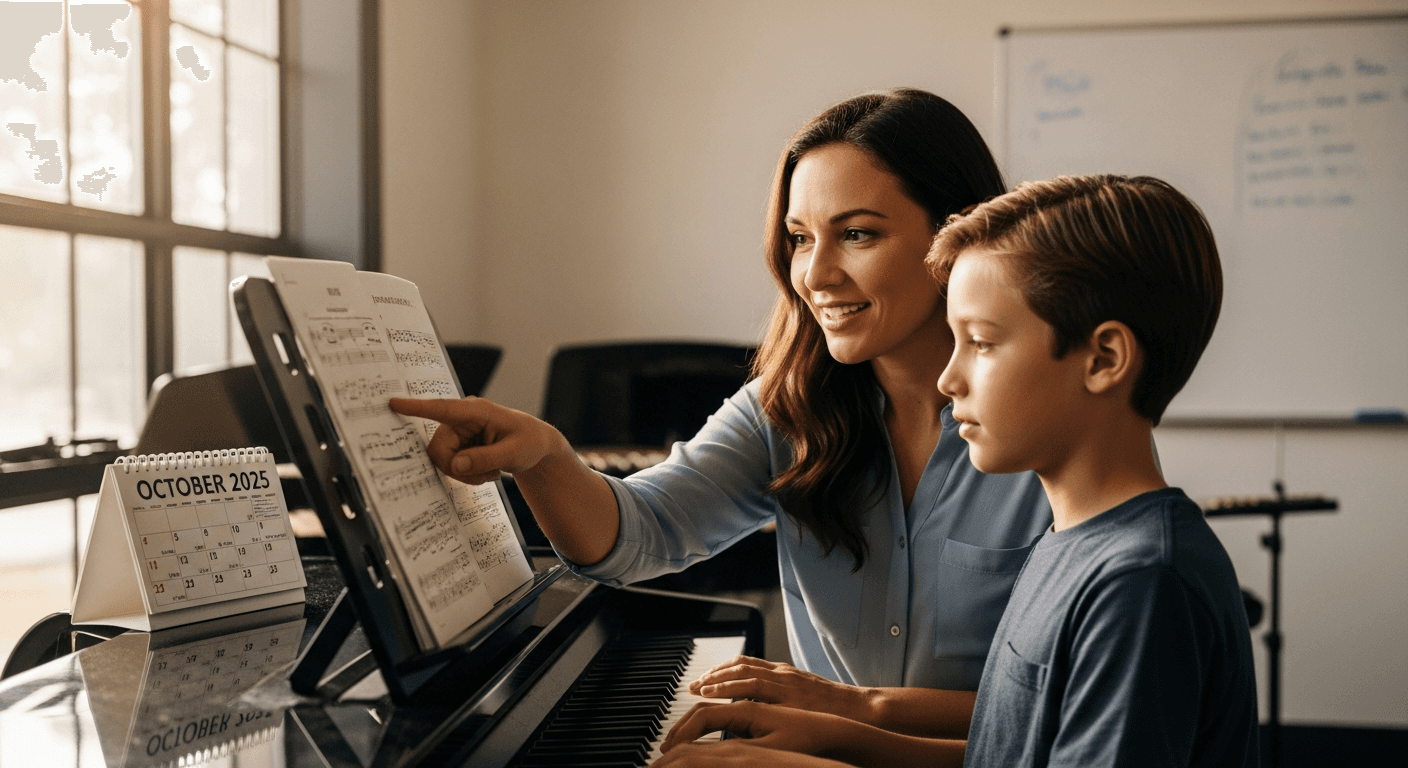
Private Lesson Templates. One-on-one instruction allows for highly personalized templates. Structure these around technique warm-ups, repertoire work, and skill-building exercises. Include space for practice assignment notes and parent communication.
Ensemble and Band Templates. Large group templates focus on rehearsal flow and section work. Plan for instrument setup time, tuning procedures, and targeted practice on challenging passages.
Music Environment Recommendations
Below you'll find information about lesson duration, key focus areas, and common activities across different learning groups.
Music Group | Lesson Duration | Key Focus Areas | Common Activities |
|---|---|---|---|
Elementary (K-5) | 30-45 minutes | Basic concepts, rhythm, singing | Songs, movement, simple instruments |
Middle School (6-8) | 45-50 minutes | Music literacy, ensemble skills | Band/choir rehearsal, theory |
High School (9-12) | 50-90 minutes | Advanced performance, music theory | Ensemble rehearsal, composition |
Private Lessons | 30-60 minutes | Individual technique, repertoire | Personalized instruction, practice review |
While standardized templates help maintain consistency across different instructors, there isn't a one-size-fits all approach. The key is matching your template structure to your specific teaching context. For example, elementary students need consistent routines and clear expectations to feel secure and ready to learn while high school learners might do better with more inclusion of unstructured time for creative exploration.
Elementary Music Lesson Planning Guide
Elementary music lessons require special consideration for young learners' developmental stages and attention spans. Children in grades K-5 learn best through active participation, repetition, and play-based activities. Consider the following when designing lesson plans for these young learners:
Age-Appropriate Activity Design. Kindergarten through second grade students thrive with activity blocks that are generally in the 5-7 minute range. Third through sixth graders, though, can usually handle slightly longer segments in the range of 8-12 minutes. Regardless, plan for frequent movement breaks and hands-on experiences with these young learners.
Movement and Kinesthetic Learning. Young children learn musical concepts through their bodies first. Include clapping, marching, dancing, and instrument play in every lesson. Simple movements like swaying for slow tempos or tiptoeing for soft dynamics make abstract concepts concrete.
Classroom Management Strategies. Set up clear signals for attention and transitions. Use call-and-response patterns, hand signals, or specific songs to manage classroom flow. Keep instruments organized and teach proper handling procedures from day one.
Basic Theory Through Games. Introduce note values through pizza slices or animal sounds. Teach pitch direction with hand levels or scarves. Make lesson planning more efficient by building a collection of go-to games that reinforce multiple concepts.
High School Music Lesson Planning Strategies
High school music education demands sophisticated planning that balances advanced skill development with college preparation and real-world application. Students at this level can handle complex concepts and longer practice sessions while developing their musical identity. Remember that high school students benefit from understanding how their musical skills connect to potential career paths and college opportunities. Consider the following lesson plan strategies for this learning group.
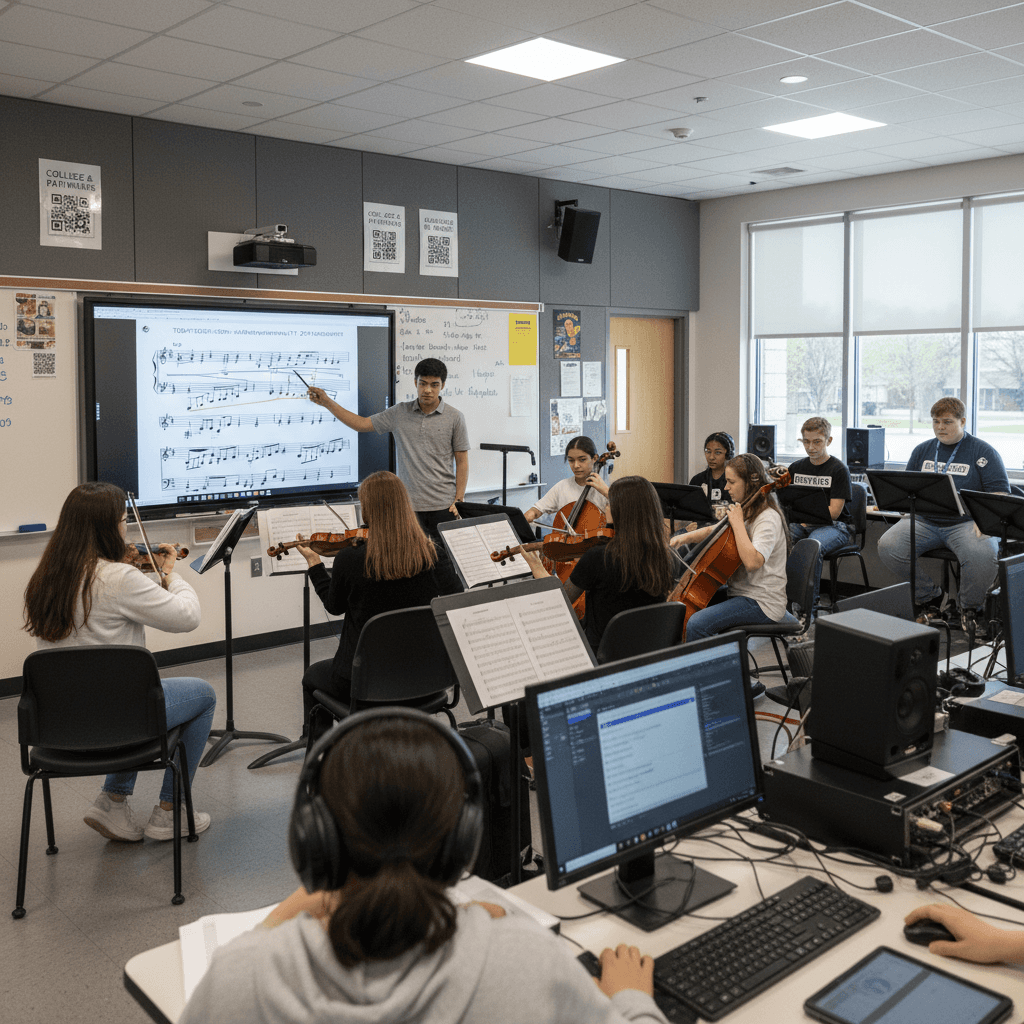
Advanced Concept Integration. High school lessons should weave together performance, theory, and music history. Students can analyze harmonic progressions while rehearsing pieces, connecting theoretical knowledge to practical application. To accommodate that, plan lessons which challenge students intellectually while building technical skills. For example, design 50-90 minute blocks around major concepts rather than fragmented activities. High school aged students can maintain focus for extended periods when engaged with meaningful material.
Performance Preparation Focus. Structure lessons around upcoming concerts, competitions, or auditions. Break complex pieces into manageable sections and create practice schedules that build toward performance deadlines. To prepare them for performance, you can include mock auditions and peer feedback sessions.
College and Career Readiness. Add music technology, composition software, and recording techniques. To really help this student group prepare for college or a music career, include learning objectives that teach them to analyze their own performances and set improvement goals. Lean into music teaching resources which often include career exploration components.
Student Leadership Development. Assign section leader responsibilities and peer mentoring roles. This develops leadership skills while reinforcing their own musical understanding. You can even have advanced students assist with younger ensembles, if the opportunity is available, or lead sectional rehearsals. When adding this to your high school instruction, consider how staff management principles apply to student leadership roles. This will create clear expectations and accountability systems which mirror professional music environments.
Effective high school planning requires balancing structure with creative freedom, allowing students to pursue their musical interests while meeting rigorous academic standards.
Private Music Lesson Planning Best Practices
Private music lessons offer unique opportunities for personalized instruction that group settings simply cannot match. One-on-one teaching allows you to tailor every aspect of the lesson to individual student needs, learning styles, and musical goals.
Private lessons succeed when students feel heard, challenged appropriately, and supported in their individual musical journey. Consider the strategies below when developing lessons for one-on-one instruction but remember to draw from the appropriate learning group recommendations, such as for younger children in elementary/middle school versus high school-aged learners, when developing your plans. Your goal should be to remain flexible to accommodate student needs while maintaining consistent lesson routines.
Personalized Instruction Approaches
Start each lesson by assessing where your student stands that day. Some students arrive energized and ready for challenges, while others need gentle encouragement. Adjust your lesson pace and difficulty accordingly.
One-on-one instruction provides a way for you to personalize the learning experience. One recommendation is to create individual practice journals that track progress over time. In these journals you can note technical improvements, musical breakthroughs, and areas needing attention. This documentation helps you plan future lessons and communicate progress to parents.
Structured Lesson Framework
Private lessons benefit from consistent structure while maintaining flexibility for teachable moments. Here's a recommended private lesson framework that maximizes learning time for a 35 minute to 55 minute lesson:
Lesson Component | Time Allocation | Purpose | Example Activities |
|---|---|---|---|
Warm-up | 5-10 minutes | Technical preparation | Scales, breathing exercises |
Review | 10-15 minutes | Reinforce previous learning | Practice familiar pieces |
New Material | 15-20 minutes | Introduce concepts | New songs, techniques |
Practice Planning | 5-10 minutes | Homework assignment | Practice schedule, goals |
Student Engagement Strategies
Keep students motivated by setting achievable short-term goals alongside long-term objectives. Celebrate small victories and help students understand how daily practice connects to their bigger musical dreams.
Band and Orchestra Lesson Planning
Large ensemble rehearsals present unique planning challenges that require balancing individual skill development with group cohesion. Managing anywhere from 15 to 80 musicians demands strategic organization and efficient time management to maximize every rehearsal minute. Consider the following planning recommendations when working with these groups but always keep in mind that effective ensemble planning requires thinking like a conductor and administrator simultaneously, balancing musical goals with logistical realities.
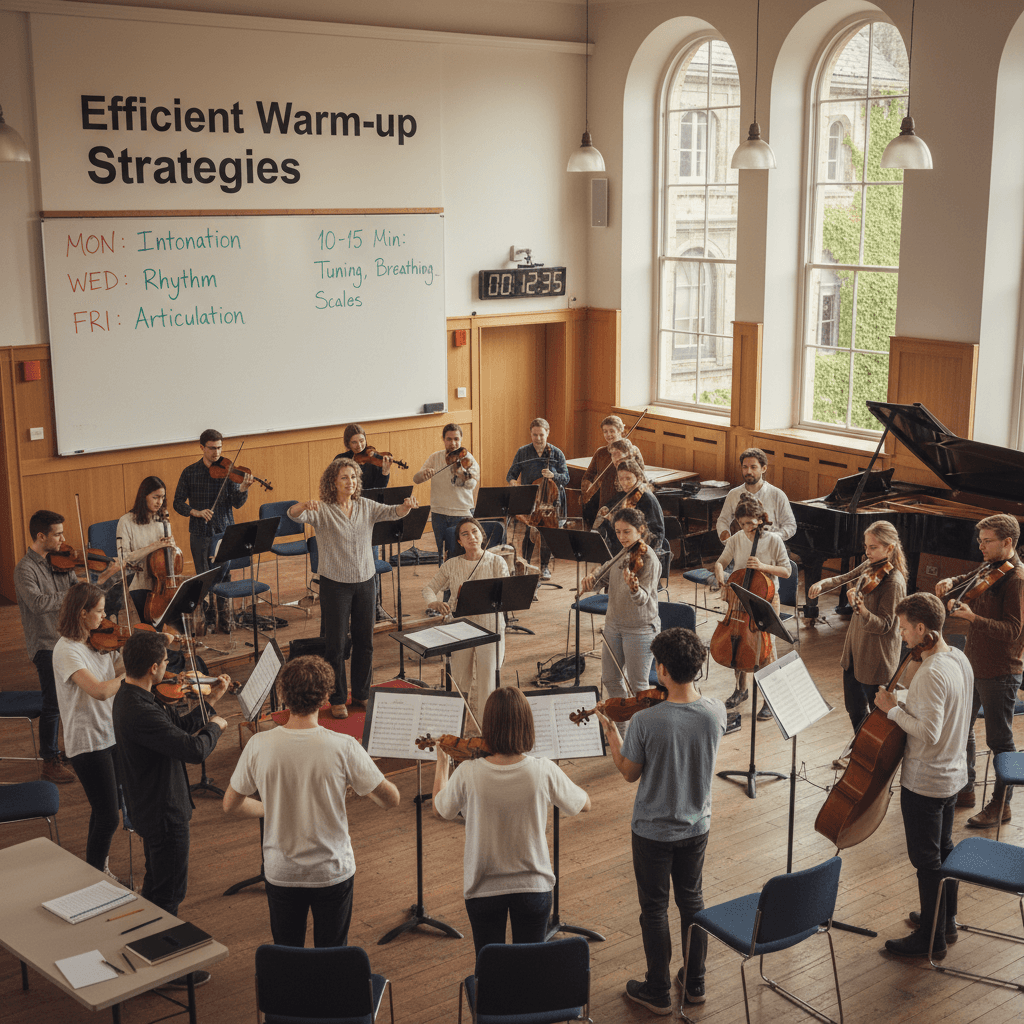
Efficient Warm-up Strategies. Start rehearsals with structured warm-ups that cover both technical and musical elements. Plan 10-15 minutes for tuning, breathing exercises, and scale work that connects to your repertoire. Use warm-ups to reinforce concepts you'll apply in pieces later. Rotate through different warm-up focuses throughout the week: for example, Monday for intonation, Wednesday for rhythm, Friday for articulation. This systematic approach gives you complete skill development.
Repertoire Selection and Pacing. Choose pieces that challenge your ensemble without overwhelming them. Plan repertoire that builds skills progressively throughout the semester. Balance familiar crowd-pleasers with educational pieces that stretch musical boundaries. Break complex pieces into manageable sections during rehearsal. Spend focused time on challenging passages rather than running entire pieces repeatedly.
Sectional Planning Integration. Schedule regular sectional rehearsals where instrument families work separately on technical passages. Plan these sessions around your full ensemble schedule, targeting specific measures that need attention.
Band directors often benefit from detailed seating arrangement planning that supports both sound balance and student development.
Effective Lesson Planning Organization and Time Management
Successful music educators develop systems that simplify their planning process without sacrificing lesson quality. The key lies in creating efficient workflows that become second nature, freeing up mental energy for creative teaching moments. Efficient planning strategies often involve batch processing similar tasks and systematic approaches to resource organization. Effective organization systems can save between 30 and 45 minutes per week of planning time, which will add up to a serious amount of hours over the course of a school year. The goal is to create sustainable systems which support your teaching rather than overwhelming it.
Weekly Planning Routines. Set up a consistent planning schedule that works with your natural rhythms. Many teachers find Sunday afternoons ideal for weekly planning, while others prefer daily 15-minute planning sessions. It's a good idea, to make planning faster, to create master templates for each type of lesson you teach. Having standardized frameworks eliminates the need to start from scratch every time while still allowing for customization.
Resource Organization Systems. Organize your materials both digitally and physically. You can start by creating folders for each grade level or ensemble, with subfolders for warm-ups, repertoire, and assessment tools. To help speed up future planning, keep frequently used resources, like templates, easily accessible. Finally, maintain a running list of successful activities categorized by concept, age group, and time requirement. This will become your go-to resource when lessons need quick adjustments.
Balancing Detail with Flexibility. Plan your lesson structure thoroughly but don't be so rigid that you can't pivot based on unforeseen circumstances in the environment or with individual students. Include backup activities for when lessons move faster than expected, and be ready to extend successful activities that engage students deeply.
Common Music Lesson Planning Mistakes and How to Avoid Them
Even experienced music educators fall into planning traps that undermine their teaching effectiveness, or make other mistakes, such as not maintaining clear communication with students and parents. Recognizing these common teaching mistakes helps you develop stronger planning habits, better plans that serve both you and your students better.
Over-Planning and Rigid Scheduling
Many teachers create overly detailed plans that leave no room for spontaneous learning moments. When students show genuine excitement about a concept, rigid planning can force you to cut off engagement to stay on schedule.
To remain flexible, plan your core objectives but build in buffer time. If students grasp concepts quickly, have extension activities ready. If they need more instruction on a particular concept or skill, be open to adjusting your timeline even if it changes your lesson plan.
Unclear Learning Objectives
Vague goals like "students will appreciate classical music" provide no measurable outcomes. Without clear objectives, you cannot assess whether learning actually occurred or plan appropriate follow-up lessons.
To develop clear learning objectives, you should write specific, measurable objectives using action verbs. "Students will identify major and minor triads by ear" gives you concrete assessment criteria and helps students understand expectations.
Insufficient Assessment Integration
Many teachers treat assessment as an afterthought rather than building it into lesson structure. This leads to unclear understanding of student progress and ineffective future planning. You should plan both formal and informal assessment opportunities throughout each lesson. Activities such as quick listening checks, peer evaluations, and exit tickets provide immediate feedback that informs your next steps.
Poor Time Management
Underestimating setup time, transitions, and cleanup leads to rushed lessons and frustrated students. Effective planning accounts for all classroom realities, including instruction time and everything else.
FAQ
How long should each activity be in an elementary music lesson?
While there isn't a set activity block time for different aged learners in elementary schools, it is recommended, based on industry research on music and movement education, that you tailor 5-7 minute activity blocks for grades K-2, and 8-12 minute segments for grades 3-6. Regardless, plan frequent transitions and movement breaks to maintain engagement throughout the lesson.
What's the difference between planning for private lessons versus group classes?
Private lessons require personalized frameworks that adapt to individual student progress and learning styles, while group classes need structured activities that engage multiple students simultaneously. Private lessons can be more flexible with timing, whereas group lessons need consistent pacing for all participants.
How can I make my lesson plans more flexible without losing structure?
Plan your core learning objectives thoroughly but hold specific activities lightly. Include backup activities for when lessons move faster than expected, and build in buffer time so you can extend successful activities that deeply engage students.
When should I consider using management software for lesson planning?
If you're spending more than 30-45 minutes weekly on administrative tasks like attendance tracking, progress notes, and parent communication, management software can reduce this time and free you to focus on creative lesson development.
How do I write effective learning objectives for music lessons?
Use specific, measurable action verbs like "perform," "identify," or "show" rather than vague terms like "understand." For example, write "students will clap quarter and eighth note patterns in 4/4 time" instead of "students will learn about rhythm."
Final thoughts on music lesson planning success
The difference between good and great music lessons often comes down to smart planning approaches that work with your teaching style, not against it. When you have the right balance of structure and flexibility, those magical classroom moments can happen naturally while you still meet your educational goals. Noto can handle the administrative side of music lesson planning, giving you more time to focus on what matters most: creating meaningful musical experiences for your students. Start building your planning system today and watch how much more enjoyable teaching becomes.