

If you manage a tutoring business, finding new students is key to long-term success. So advertising your services is a must. But you may not be a marketing or advertising expert, or even know where to begin. This guide will explain where to show up, what to say, and how to turn curious parents into happy customers.

TLDR:
Focus on free channels first: your Google Business Profile, local Facebook groups, and community boards.
Keep track of where each student finds you, so you can understand which channels work best for your business.
Request reviews after grade improvements or test score wins, when parents will be most enthusiastic.
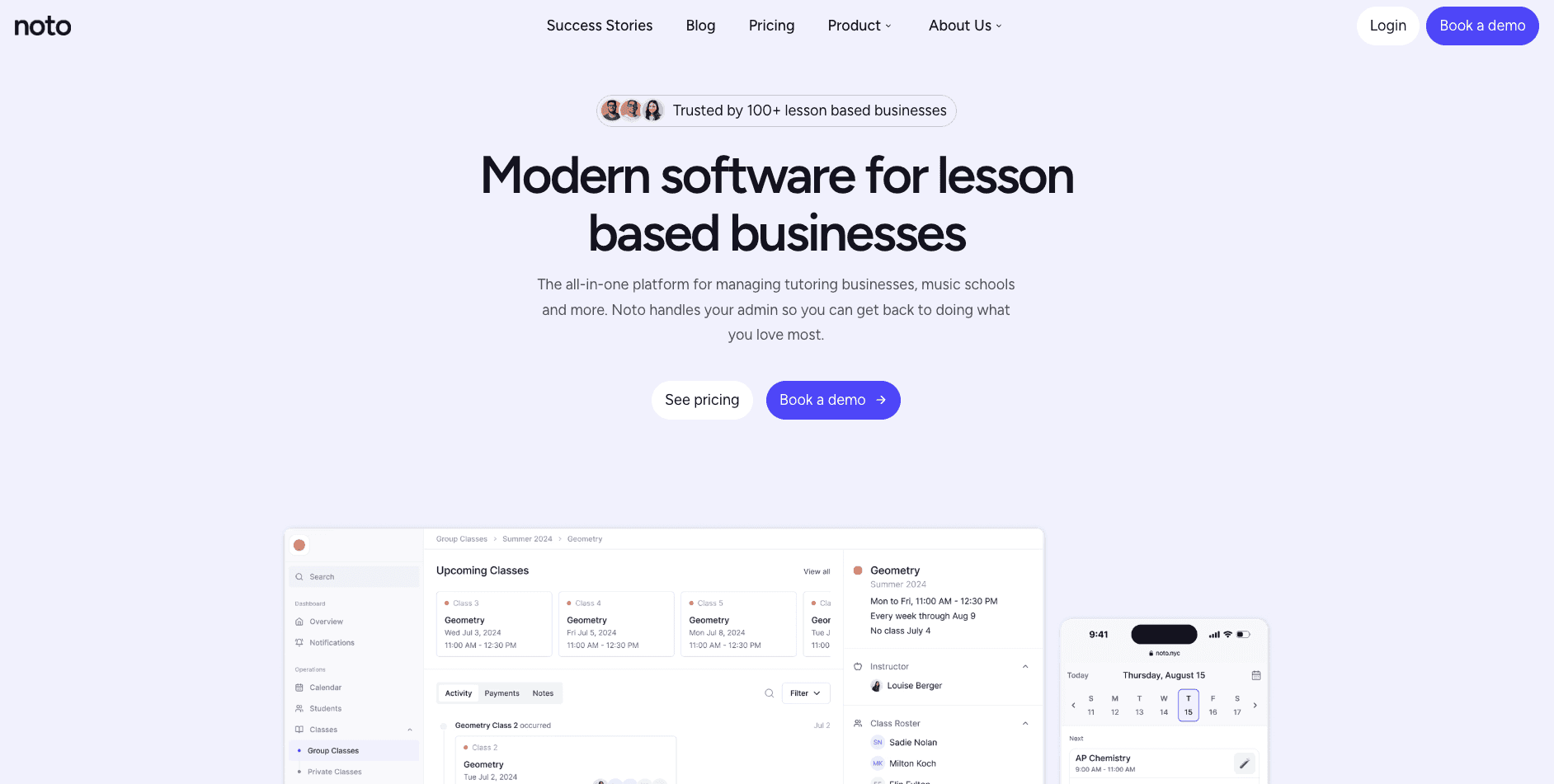
Noto can automate scheduling, billing, marketing, and lead tracking, so you can spend less time on administrative tasks and more time growing your tutoring business.
1. Build Your Online Presence with a Professional Tutoring Website
Your website acts as the home base for all tutoring marketing efforts. In one study, 81% of consumers said that it's important for a business to have a website. A solid web presence communicates reliability and professionalism.
Necessary elements for a tutoring website include:
Subject areas and grade levels you cover, with a clear description of your teaching methodology and what sets you apart from other tutors.
Your educational background, teaching certifications, and relevant experience.
Clear pricing information, including prices for your session packages.
A booking form or calendar integration that lets parents schedule consultations or trial sessions directly without email exchanges.
Every other marketing channel should point back to your site. Whether prospects discover you through social media, printed materials, or referrals, they'll probably verify your credentials online before booking. (And make sure your site is optimized for mobile. Today, about half of all traffic to websites is happening on mobile devices.)
If you're just starting your tutoring business, a website should be a first step.
2. Claim and Optimize Your Google Business Profile
A Google Business Profile offers free visibility in local search results and Google Maps. When parents search "math tutor near me" or "SAT prep in [your city name]," an optimized profile can place you at the top without paid ads. More than 80% of consumers use Google to check out local businesses.
Claim your business listing at google.com/business and complete every field, including business category (select "Tutoring Service" or "Private Tutor"), service areas if you travel to students, hours of availability, and a description of your specialties and qualifications.
Add photos of your tutoring space or materials. Upload new images every few months, since fresh content signals active operation to Google's algorithm.
The Q&A section lets you answer common parent questions about rates, subjects offered, or whether you provide online sessions.
Ask satisfied families to leave reviews by sending a direct link to your profile after successful sessions. Respond to every review to show you value feedback.
3. Use Social Media to Build Authority and Connect with Parents
Different social platforms attract different audiences. Facebook connects you with parents of school-age children, while LinkedIn reaches professionals seeking test prep or adult tutoring. Instagram works for sharing visual study tips with teen audiences. Classes like adult ESL or professional skills development work on both LinkedIn and targeted Facebook groups. One study says that 58% of consumers discover local businesses on social media.
After you choose your platform, you can post content. Consider tips that showcase your teaching style without revealing your complete curriculum. A math tutor might demonstrate a mental calculation shortcut. An English tutor could discuss frequent grammar errors. These posts build trust and help parents visualize what your sessions offer.
Answer questions in relevant Facebook groups without being promotional. When parents seek subject help or tutor recommendations, offer genuine advice that displays your expertise. Interested parents will visit your profile naturally.
Facebook Advertising Basics
Facebook ads target parents by location, children's ages, interests, and household income. Create ads around specific challenges like "struggling with algebra" or "college application essays due soon" rather than generic tutoring messages. Direct traffic to your booking page or a lead form that captures contact details for follow-up.
4. Post on Free Local Advertising Platforms and Community Boards
Free advertising channels connect you with families in your area without requiring marketing budgets. These hyperlocal options work well for tutors who are starting out or operating with minimal overhead.
Nextdoor functions as a neighborhood-specific network where residents seek local service recommendations. Create a business page and post about your tutoring services in relevant categories. Join conversations where parents discuss school challenges or homework struggles, offering helpful perspective before mentioning your availability.
Craigslist remains effective despite its dated interface. Post in the "Services > Lessons & Tutoring" section with a clear subject lines like "Certified Math Tutor for Grades 6-12 in [Your Neighborhood or Town]." Refresh listings weekly since posts quickly get buried.
Community Facebook groups organized by neighborhood, school district, or parent networks allow targeted posts. Read group rules first since many restrict promotional content or designate specific days for service providers. Frame posts as offering solutions rather than selling services.
5. List Your Services on Tutoring Marketplaces and Directories
Tutoring marketplaces give you immediate access to families comparing tutor options. Wyzant, Tutor.com, Care.com, and Varsity Tutors maintain user bases searching for help across subjects and grade levels.
Most marketplaces charge a commission (typically somewhere between 15% and 40%) on the hourly rate you charge for tutoring, covering lead generation and payment processing. Competition runs high in popular subjects, making profile differentiation critical.
Note your specific credentials instead of making broad claims. Replace "experienced math tutor" with "Former high school calculus teacher specializing in AP exam prep with 15 students scoring 4+ last year." Quantifiable results attract more inquiries.
Use a professional headshot in a teaching setting. Profiles with clear photos are often more engaging than those without.
6. Partner with Schools and Educational Organizations
For parents, schools and learning centers are a trusted referral source. Guidance counselors, special education coordinators, and principals regularly receive requests for tutor recommendations from families.
Send a brief introductory email to school administrators outlining your qualifications, subjects covered, and contact information. Offer to be included on their referral lists. Provide schools with simple referral cards containing your name, phone number, email, and areas of expertise so administrators can easily share your information with parents.
After-school programs and test prep centers occasionally hire outside tutors when student demand exceeds their staff capacity. Check job boards at local learning centers or contact them directly about contract opportunities that could lead to direct client referrals.
7. Create and Distribute Eye-Catching Print Materials
Business cards fit into wallets and get passed along when parents recommend your services. Flyers and posters work in high-traffic spots where families gather naturally.
On flyers, keep information minimal: your name, subjects, grade levels, one credential (certified teacher or subject specialist), phone number, and website. Add a single benefit statement like "Personalized sessions that build confidence." You may want to design tear-off flyers with your contact information on tabs.
Design for quick reading. Use clear fonts large enough to read from several feet away. Break information into bullet points instead of paragraphs.
Post materials where parents already spend time: pediatrician waiting rooms, youth sports facilities, school pickup areas (where allowed), and children's activity venues. (Get permission before posting.) Also consider bulletin boards at libraries, coffee shops, community centers, and grocery stores.
8. Build a Referral Program to Turn Students into Advocates
Students who get results will mention your tutoring services to others. A referral program turns those mentions into trackable enrollments. For businesses in general, referral leads convert at 30% higher rates.
Structure your incentives to benefit everyone involved. In some cases, you may want to give current students a free session or discount when their referred friend books lessons. Offer new families a trial session discount to reduce signup friction.
Share your referral program across multiple channels. Mention it after productive sessions when students show enthusiasm about their progress. Include referral details in booking confirmations, invoices, and parent updates, as well as on your website.
Also, you might want to add "How did you hear about us?" to your intake forms to track which students are bringing in new clients.
9. Collect and Showcase Student Testimonials and Reviews
Parents trust other parents more than any marketing claim you could make. Reviews provide the proof that your tutoring delivers actual results.
Request testimonials after meaningful moments: when a student improves a letter grade, scores well on a test, or expresses newfound confidence in a subject. Send a simple email asking for a brief statement about their experience and where they'd feel comfortable posting publicly.
Direct satisfied families to review you on Google, your Facebook page, and any tutoring marketplaces where you maintain profiles. Provide direct links to each review site rather than asking them to search.
Feature your strongest testimonials across all marketing materials and your website. When testimonials mention measurable outcomes like grade improvements or test score increases, those concrete results resonate more than general praise about being "great" or "helpful."
10. Use Email Marketing to Nurture Leads and Engage Past Students
Email connects you directly with parents without relying on algorithms or paid ads. Messages sit in inboxes where recipients can return to them when they're ready to book.
Gather addresses through website contact forms, trial session bookings, and consultation requests. Add a signup form offering something useful like "5 Study Techniques That Actually Work" or "A Parent's Guide to Choosing the Right Tutor."
Divide your list into active students, past students, and prospects who haven't booked. Current families get session updates and learning tips. Past students receive re-enrollment reminders before fall semester or exam seasons. Prospects see educational content that showcases your expertise with clear booking calls-to-action.
Time campaigns around academic pressure points when tutoring demand peaks: back-to-school in August, midterms in October and March, finals in December and May, and summer test prep. A "Spots filling up for SAT prep" message three weeks before registration deadlines can help turn inquiries into bookings.
11. Invest in Targeted Paid Advertising
Paid ads are an option if your budget allows (although some highly specialized tutoring niches may not see good results from paid ads). Google Ads should target high-intent searches like "algebra tutor near me" or "ACT prep in [your city name]."
Facebook and Instagram let you reach parents by location, household income, and age range. Build campaigns around specific academic timelines: AP exams in six weeks, report cards arriving soon, or SAT registration deadlines.
You can start off spending $10 to $20 per day. Test different ad copy and images, tracking cost per consultation booking. If each consultation costs more than, say, $50 in ad spend, organic channels may deliver better returns.
Track which ads generate enrolled students versus unqualified inquiries, and double down on them.
12. Create Educational Content to Demonstrate Expertise
Educational content brings families searching for homework help directly to your website through search engines. Blog posts answering specific academic questions can continue ranking and driving traffic long after you publish them, with no additional ad costs.
Write posts that target the exact struggles parents and students type into Google. Posts like "How to Solve Quadratic Equations Step by Step" or "Essay Structure for AP English" demonstrate your teaching expertise while pulling in organic search visitors who need help in your subject area.
YouTube tutorials reach students who prefer video explanations. Record five- to ten-minute explanations of commonly misunderstood topics in your subject. Optimize your video titles with searchable phrases like "chemistry stoichiometry explained simply" or "Spanish subjunctive conjugation guide." Add your website link in the description so viewers can book sessions after watching your teaching style.
13. Network at Parent and Education Events
Seek out face-to-face meetings at education-focused events like school fundraisers, college fairs, and education expos.
Attend as a participant rather than a vendor when possible. Volunteer at school events or sponsor activities to build relationships before discussing your services. When parents mention the struggles their children face, listen fully and offer one concrete suggestion before sharing your contact information.
Bring business cards and a brief description of what makes your approach different. Skip aggressive selling and focus on understanding specific needs families have.
14. Track Your Advertising Results and Optimize
Ask new students how they found you during intake. Track responses in a spreadsheet or tutoring software, in order to identify patterns over time.
Calculate cost per enrollment (not per click). A Facebook ad generating 50 clicks but zero bookings wastes money, compared with a Google ad with 10 clicks producing three students. Review these numbers monthly and redirect budget toward channels bringing actual enrollments.
Final Thoughts on Getting More Tutoring Clients
Building a full tutoring schedule takes consistent effort across multiple channels, but you don't need to master everything at once. Focus on the free options first to prove demand, then add paid advertising when you have budget and capacity for more students. With Noto’s integrated marketing and reputation management suite, you can automatically segment your students and families and then drop them into custom email campaigns based on their enrollment status, attendance, or progress. The system can also automatically trigger a review request to capture feedback while parents are eager to share. It’s hands-off marketing and reputation building, all powered by data you already have, so you spend less time on admin and more time teaching.
To start, pick three strategies from this list, commit to them for 60 days, and adjust based on results.
FAQ
How do I track which advertising channels are bringing in actual students?
Ask every new student how they found you during your first session and log their answer in a spreadsheet or CRM. Create unique tracking methods for each channel, and then calculate cost per enrollment monthly to identify which channels convert inquiries into paying students.
What should I include on my tutoring website to convert visitors into bookings?
Your website needs four core elements: specific subjects and grade levels you teach, your credentials and teaching experience, clear pricing or package information, and a direct booking form or calendar link. Parents will research you online before contacting you, so make it easy for them to verify your qualifications and schedule a consultation without email back-and-forth.
How much should I budget for Facebook or Google ads when starting out?
Start with $10-20 daily budgets and test different ad copy targeting specific academic challenges like "struggling with algebra" or "SAT prep starting soon." Track cost per consultation booking. If each consultation costs over $50 through ads, organic channels like Google Business Profile or local community groups may deliver better returns at your current stage.