

If you're running an education business such as a tutoring center or a music school, and your customers are paying by credit card, you're likely paying somewhere in the neighborhood of 3% per transaction. And that can add up fast! One of the best ways to cut those costs is by moving to ACH bank transfers. With Noto, for example, ACH processing fees are just 0.5%. If you're earning $500,000 in annual revenue, switching from credit card payments to bank transfers could save you $12,500 a year.

TLDR:
ACH adoption rates determine actual savings. Simple setup tools like Noto's ACH Connect achieve higher participation than manual bank payment processes.
Automated billing tied to attendance eliminates manual invoice work while making sure charges are accurate.
Noto combines ACH optimization with automated billing, marketing automation, and scheduling in one system purpose-built for tutoring centers and music schools.
What Are Payment Fee Reduction Strategies for Education Businesses?
Payment fee reduction strategies are ways for education businesses to lower the costs of accepting digital payments from their customers.
Standard credit card processing fees are around 3% of each transaction. At this rate, a tutoring center earning $500,000 annually pays $15,000 in these fees.
The most effective fee-reduction strategy is shifting payments from credit cards to ACH bank transfers. With Noto, the credit card processing fee is 0.5%. Other tactics include choosing software with transparent pricing and avoiding systems that mark up processing rates.
The right approach depends on your billing model and how well you can persuade your customers to switch payment methods. Reducing fees by even a few percentage points improves your margins without raising tuition prices.
How to Choose Payment Processing Software for Your Education Business
Four key criteria directly impact payment fee reduction for education businesses.
ACH capability matters the most. Systems that make bank transfers easy and encourage family adoption deliver the biggest savings.
Look for transparent pricing. Credit card processing fees vary by provider.
Integrated billing automation reduces manual work while keeping charges accurate.
Finally, consider the total cost savings potential of lower fees with combined with having to spend less time on manual billing tasks.
Best Overall Payment Fee Reduction Solution: Noto
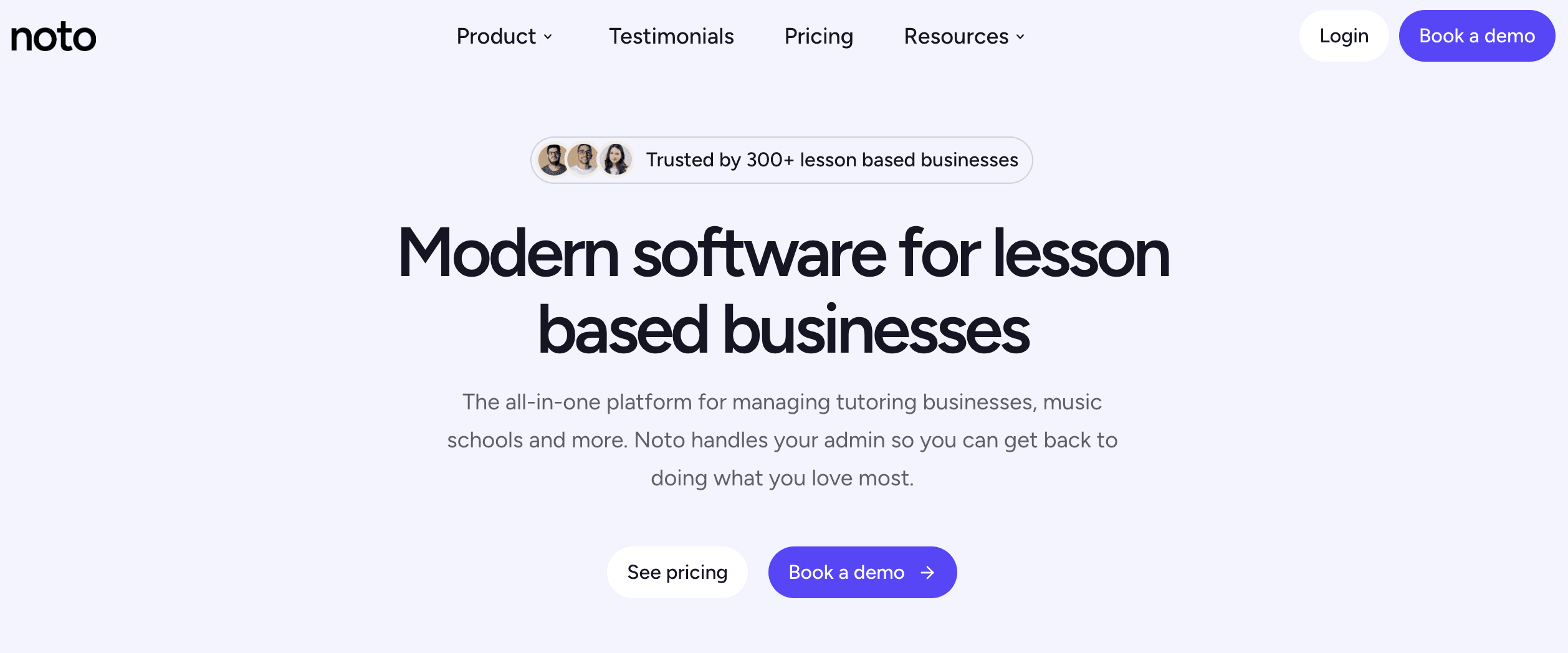
Noto cuts payment fees while automating your billing operations. Noto's ACH Connect feature makes bank payment setup simple for families, shifting most transactions from 3% credit card fees to 0.5% ACH costs. A tutoring center processing $500,000 annually saves around $12,500 by moving all payments from credit card to ACH.
Noto's billing system can handle per-session charges, prepaid packages, installments, and subscriptions automatically. Families get charged based on attendance, so you collect tuition without chasing payments or creating invoices manually.
Built for lesson-based businesses, Noto replaces your scheduling software, payment processor, and CRM tool. That eliminates multiple subscription costs, and those savings often cover the entire cost of the software.
And every Noto customer gets 24/7 live support and dedicated onboarding with a success manager who migrates your data and trains your team to implement ACH payments correctly from day one.
Opus1
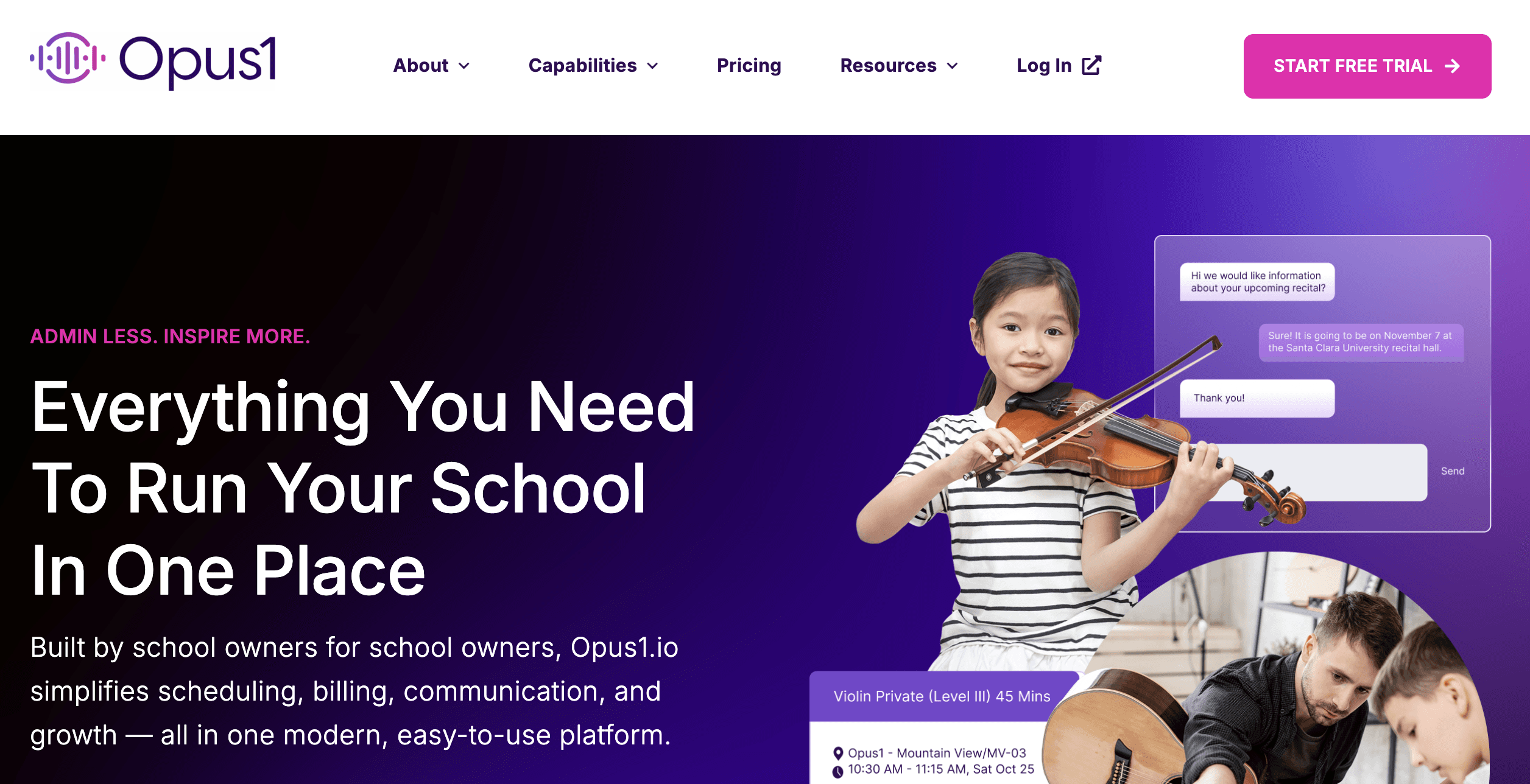
Opus1 is a music school management system with integrated payment processing and multi-location support. The software handles scheduling, billing, and communication for lesson-based businesses.
What Opus1 Offers
Automated review requests and parent engagement tools.
Stripe-based direct bank payments with multi-location support.
Scheduling and billing features for private lessons and group classes.
Communication tools for parent and student engagement.
Good for: Established music schools with multiple locations that need broad feature coverage and accept premium pricing.
Limitation: Relatively expensive pricing with considerable add-on fees for features like CRM, and users report that the CRM features are difficult to use. Bank payment setup is not as intuitive as with ACH-focused alternatives, and the self-service scheduler is also not as intuitive as some alternatives. Weak onboarding support often leaves schools without clear guidance during setup.
Bottom line: Opus1 provides broad features for music schools, but high costs and CRM usability issues may make it less attractive for businesses who want simplified ACH adoption and lower total ownership costs.
Teachworks
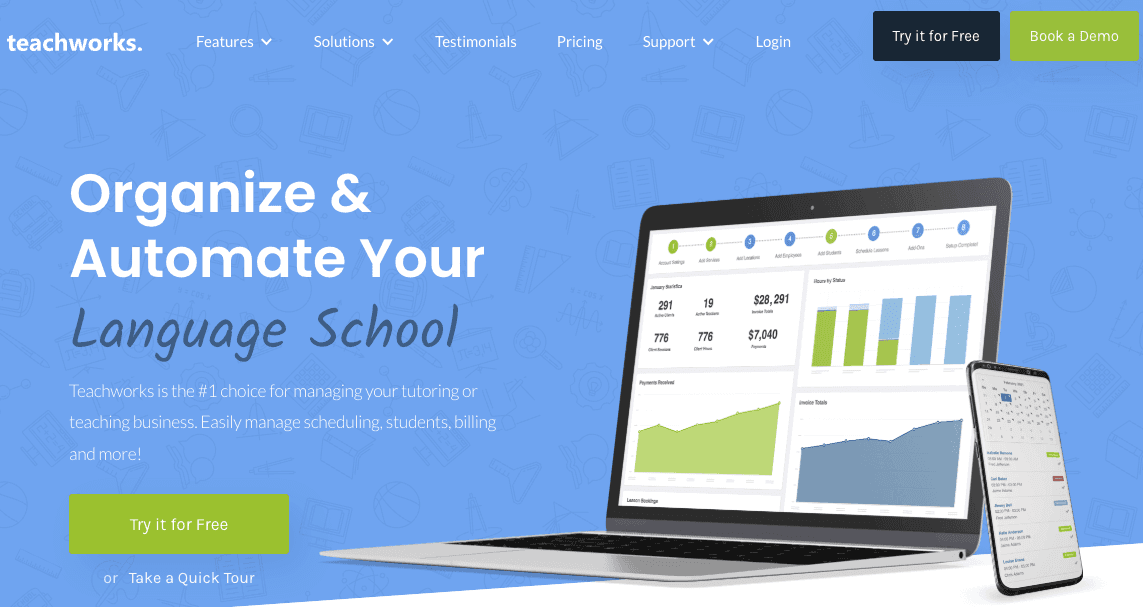
Teachworks handles lesson scheduling and invoicing for tutoring and music businesses. It covers recurring lessons, invoice generation, and student portals.
What Teachworks Offers
Recurring lesson scheduling with calendar management.
Invoice generation for simple billing models.
Student and instructor portals.
Basic reporting for lessons and finances.
Good for: Very small tutoring operations with pay-as-you-go billing that need straightforward lesson scheduling.
Limitation: Only supports pay-as-you-go or simple packages. Cannot price the same service differently without duplicating it. No CRM for lead tracking. Charges extra for time-zone functionality. No self-scheduling for private lessons.
Bottom line: Teachworks handles basic scheduling but lacks flexible billing automation and ACH optimization for reducing payment processing fees.
TutorCruncher
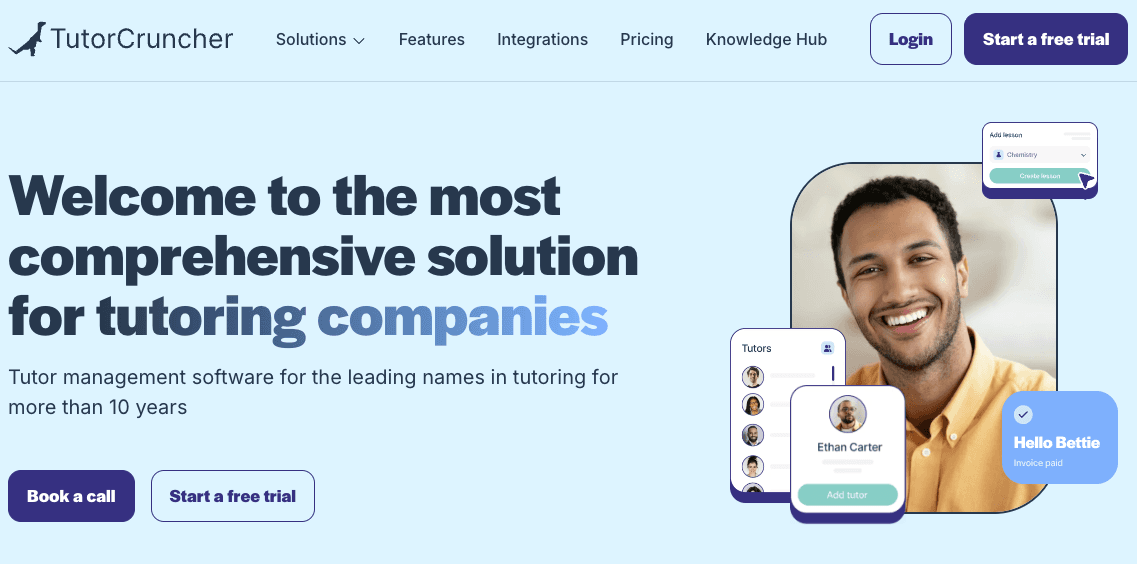
Based in the UK, TutorCruncher is a management system with complex configuration options for tutoring businesses. It offers customizable workflows across scheduling, billing, and payroll with an enterprise-like setup.
What TutorCruncher Offers
Custom billing configurations for various payment models.
Scheduling system with manual setup and reconciliation.
Configurable payroll rules tied to business logic.
Multiple dashboards for different operational functions.
Good for: Large tutoring agencies with technical resources and dedicated staff to manage ongoing configuration and reconciliation needs, particularly those operating primarily in the UK.
Limitation: Takes a long time to learn, with heavy ongoing configuration required across all workflows. Scheduling, billing, and payroll feel disconnected, requiring manual reconciliation. No built-in SMS or email communication tools, relying on external integrations. Weak US market presence and adoption.
Bottom line: TutorCruncher is a powerful but complex, UK-focused tutoring management system best suited to large agencies with technical resources, as it requires considerable setup and ongoing manual configuration.
TutorBird
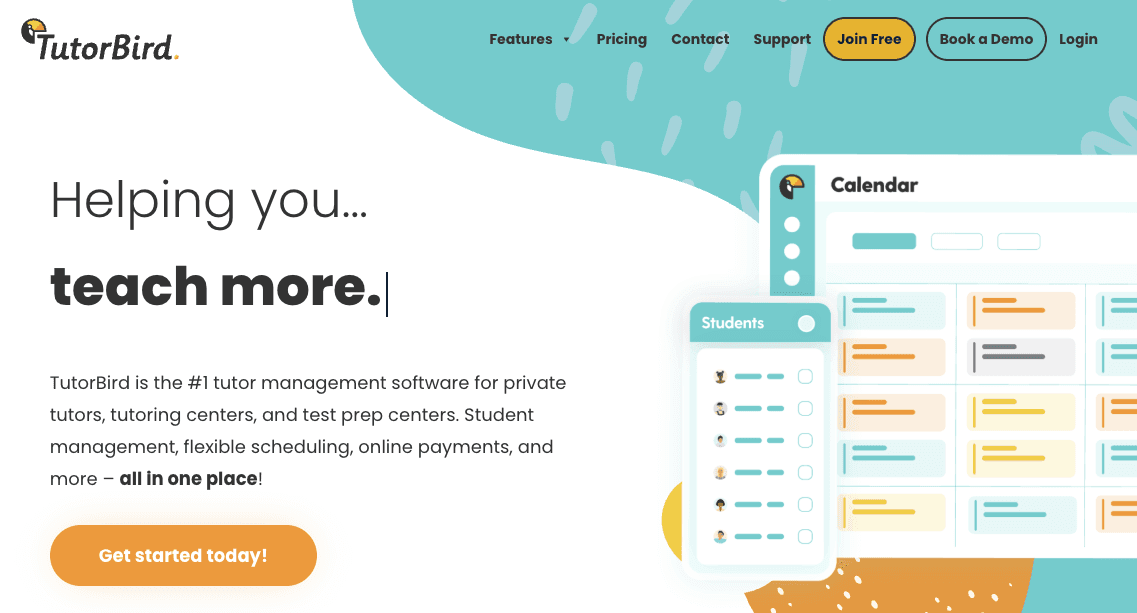
A scheduling tool for solo tutors and small lesson programs, TutorBird provides basic lesson management with limited multi-staff coordination capabilities.
What TutorBird Offers
Self-scheduling options for individual tutors.
Basic invoicing for simple payment structures.
Manual scheduling and calendar updates.
Basic parent notifications and messaging.
Good for: Freelance tutors or very small single-instructor operations with simple billing needs.
Limitation: Rigid enrollment model cannot schedule outside fixed staff-to-student assignments. Weak time-zone handling causes scheduling problems. Limited invoicing automations with only simple pay-as-you-go billing support. No CRM or automated lead flow. Manual workflows across scheduling, attendance, billing, and payroll with no staff app for instructors.
Bottom line: TutorBird works for solo practitioners but lacks the multi-staff scalability and ACH payment optimization that education businesses need to reduce fees.
Jackrabbit Technologies
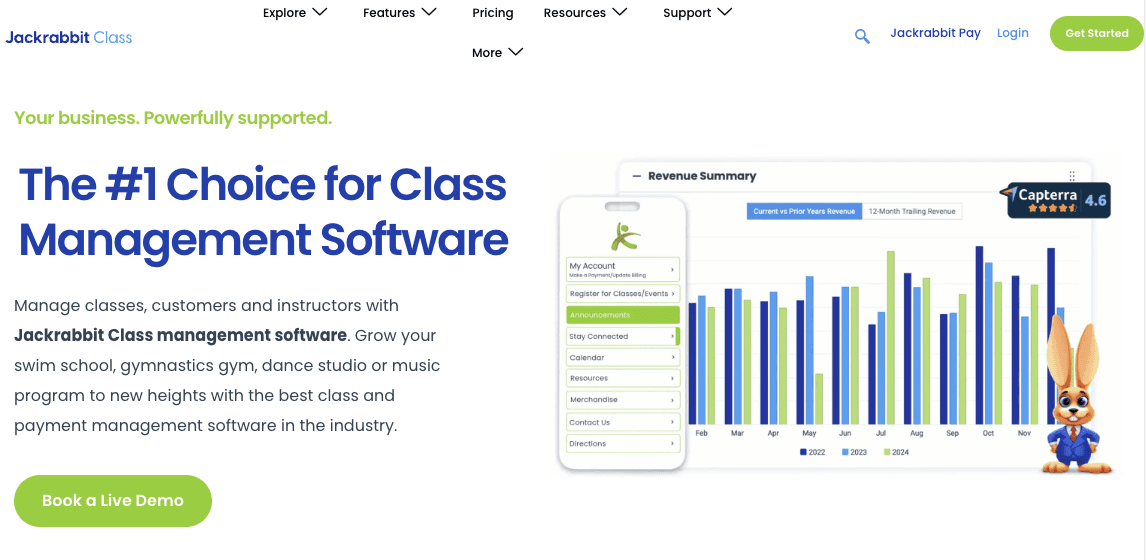
Jackrabbit Technologies manages group classes for dance studios and gymnastics centers. The system handles large class rosters and recreational program billing with family account structures.
What Jackrabbit Technologies Offers
Group class scheduling and roster management for class-based businesses.
Family account billing and payment tracking.
Attendance and check-in systems.
Good for: Dance studios and gymnastics centers with group classes and recreational programs.
Limitation: The UI feels outdated, and the system has poor private-lesson scheduling capabilities that force studios to use secondary tools for private instruction. It's not meant for businesses with private lesson components.
Bottom line: Jackrabbit works for group-class-focused businesses but falls short for lesson-based education businesses where ACH fee savings and private lesson scheduling reduce costs.
LearnSpeed
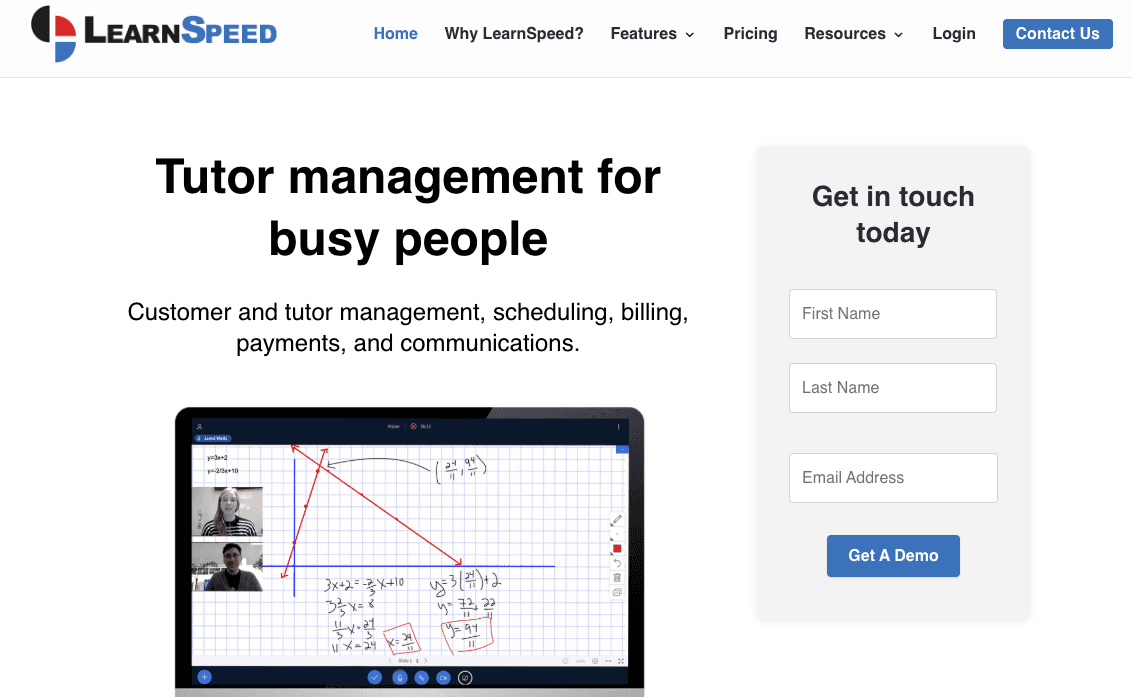
LearnSpeed is a tutoring center management system with more than 400 available reports and prospect tracking capabilities.
What LearnSpeed Offers
Prospect and follow-up tracking.
More than 400 reports for operations analysis.
Multi-function dashboards.
Good for: Large tutoring centers with dedicated administrative staff who need detailed reporting and can invest time in system training.
Limitation: Complex interface requires extensive staff training. Billing requires many manual clicks and offers limited automation. Data extraction is difficult with email exports buried in deep menus.
Bottom line: LearnSpeed provides extensive features, but complexity limits practical fee reduction. Simpler ACH adoption and automated billing save more time and costs.
Feature Comparison Table for Payment Fee Reduction Software for Education Businesses
Platform | ACH/Bank Transfer Capability | Transaction Fees | Best For |
|---|---|---|---|
Noto | ACH Connect feature makes bank payment setup simple for families, achieving high adoption rates. | 0.5% for ACH transfers, 3% for credit cards. | Tutoring centers and music schools wanting to maximize ACH adoption and automate billing across per-session, packages, installments, and subscriptions. |
Opus1 | Stripe-based direct bank payments with multi-location support, but setup is less intuitive than ACH-focused alternatives. | Standard Stripe rates (approximately 2.9% + $0.30 for cards). | Established music schools with multiple locations that need broad feature coverage and can handle premium pricing. |
Teachworks | Basic payment processing without ACH optimization. | Standard processing rates without fee reduction focus. | Small tutoring operations with pay-as-you-go billing that need straightforward lesson scheduling. |
TutorCruncher | Custom billing configurations available but no specific ACH optimization mentioned. | Standard processing rates through integrations. | Large tutoring agencies with technical resources and dedicated staff, particularly UK-based operations. |
TutorBird | Basic invoicing with simple payment structures, no ACH optimization. | Standard processing rates. | Freelance tutors or very small single-instructor operations with simple billing needs. |
Jackrabbit Technologies | Family account billing and payment tracking for group classes. | Standard processing rates. | Dance studios and gymnastics centers with group classes and recreational programs. |
LearnSpeed | Payment processing available but limited automation. | Standard processing rates. | Large tutoring centers with dedicated administrative staff who need detailed reporting. |
Why Noto Is the Best Payment Fee Reduction Solution for Education Businesses
Noto delivers the highest fee savings by solving a key problem: getting families to use ACH. ACH Connect makes bank payment setup simple, so adoption rates stay high, shifting revenue from expensive card transactions to low-cost bank transfers.
The automated billing cycle cuts out hours of manual invoice work each month. You collect payments on schedule without chasing families or reconciling charges manually.
Other solutions offer payment processing. Noto pairs fee reduction with automated billing that protects margins and returns time to your week.
Final Thoughts on Cutting Payment Processing Costs
Every percentage point you save on payment fees goes straight to your bottom line. The difference between 3% card fees and 0.5% ACH adds up to thousands annually for most education businesses. Choose software that makes lower transaction costs simple for families and automates billing so you're not stuck doing manual work. Your margins will improve while your workday gets easier and more fulfilling.
FAQ
How do I choose the best payment processing solution for my tutoring or music school?
Start by calculating your current payment processing costs (typically 3% of revenue for credit cards), and then look for solutions that make ACH bank transfers simple for families to adopt. Look for systems that automate your billing model, and calculate total savings by combining lower transaction fees with time saved on manual invoicing.
Can I reduce payment fees without switching my entire management system?
While you can add standalone payment processors with lower rates, you'll still manage scheduling, billing, and payments separately, and this creates manual reconciliation work. The biggest savings come from systems that combine ACH optimization with automated billing, since you eliminate both transaction fees and the hours spent creating invoices and chasing payments manually.
What's the difference between basic ACH support and ACH-optimized payment systems?
Basic ACH support means the option exists but requires manual setup steps that discourage family adoption. ACH-optimized systems like Noto's ACH Connect make bank payment enrollment simple and fast, achieving high adoption rates that actually shift most transactions away from expensive card fees, turning potential savings into real cost reduction.